

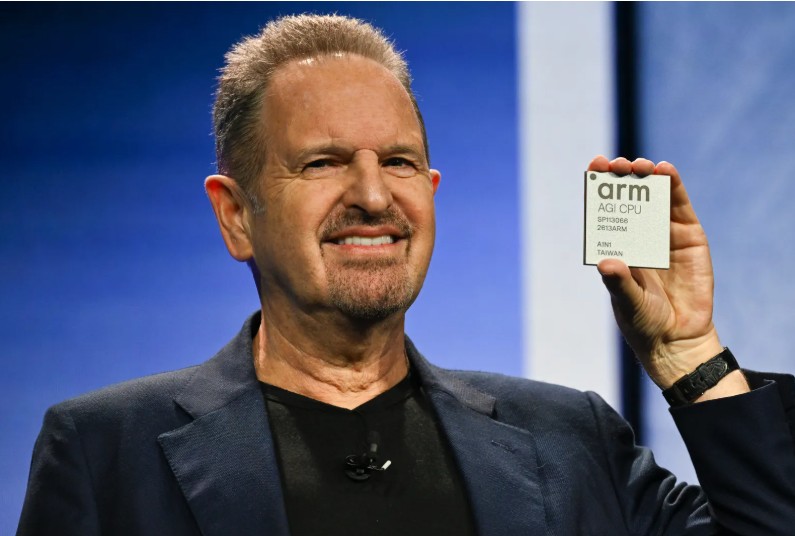
A major strategic shift is underway at Arm Holdings, as the company moves beyond its long-standing role as a chip designer to build and sell its own CPU. The decision, championed by CEO Rene Haas, reflects growing demand for computing power driven by artificial intelligence and signals a new phase in the company’s evolution, tells Wired.com.
For decades, Arm’s business model centered on licensing its architecture to companies such as Apple, Nvidia, and Qualcomm, which then designed and manufactured their own chips. This approach helped Arm become one of the most widely adopted computing platforms in the world. Now, by producing its own silicon, the company is entering direct competition with many of those same partners.
Haas argues that the shift is a response to customer demand, particularly from companies building large-scale AI systems. The new CPU, designed for data centers and so-called agentic AI workloads, aims to deliver improved efficiency and performance. Arm positions the move as a natural extension of its platform strategy, enabling tighter integration between hardware and software while supporting increasingly complex AI applications.
However, the strategy carries clear risks. By competing with its own ecosystem, Arm could strain relationships with key partners who rely on its designs. Companies that once viewed Arm as a neutral technology provider may now see it as a rival. This tension raises questions about whether the broader ecosystem will remain aligned or fragment as competition intensifies.
At the same time, the move reflects broader changes in computing. As AI systems demand more specialized and efficient hardware, traditional boundaries between chip designers and manufacturers are blurring. Arm’s entry into chip production highlights a growing belief that controlling more of the stack, from architecture to silicon, offers strategic advantages.
The outcome remains uncertain. If successful, Arm could capture a larger share of the expanding AI infrastructure market. If not, it risks disrupting the partnerships that made it dominant. Either way, the decision marks a turning point, signaling that even foundational players are willing to rewrite long-standing industry rules.
