

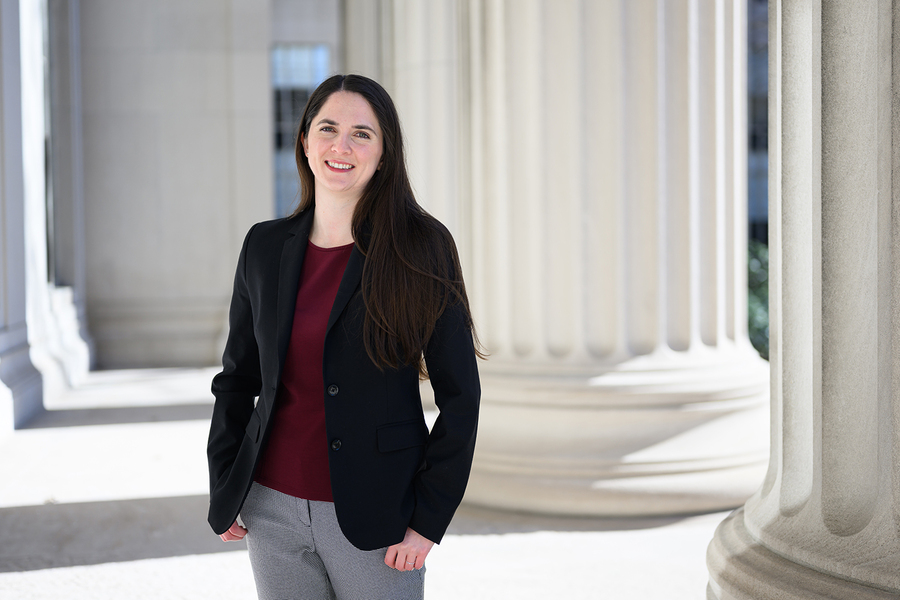
Nuclear power could play a larger role in clean energy, but its economic viability depends partly on reducing operating costs. MIT doctoral student Lauren Fortier is addressing this challenge by developing remote operation protocols and supervisory control systems that could enable greater automation in nuclear power plants, tells MIT News.
Fortier brings firsthand experience to the research. After studying materials science and engineering at Northwestern University, she served as a naval nuclear operator and supervised reactor operations aboard a U.S. aircraft carrier. The experience showed her that many nuclear plant procedures remain labor-intensive and prompted her to explore whether automation could reduce that burden.
At MIT, Fortier developed a supervisory control system during her master’s research and continued the work after beginning her doctorate. Her research is particularly relevant to microreactors, which could eventually operate in rural and remote locations. Unlike large conventional plants, distributed microreactors may not be economically able to maintain large teams of operators.
Fortier envisions a central supervisory system in which humans and machines share responsibilities according to their strengths. Human operators would intervene strategically when necessary rather than manually managing every procedure.
Importantly, her approach does not rely on artificial intelligence or machine learning. Instead, Fortier uses finite state automata, a transparent form of conventional automation in which actions are triggered by clearly defined events and plant conditions. This structure makes the system’s decisions easier to understand, verify, and validate.
Her doctoral research is also moving toward objective-oriented operations. Rather than following only predetermined procedures, a control system could determine the sequence of actions needed to achieve a specified objective.
Fortier is collaborating with researchers at MIT, Idaho National Laboratory, and Westinghouse. Her work earned recognition in the Department of Energy’s 2025 Innovations in Nuclear Energy Research and Development Student Competition. Ultimately, scalable supervisory automation could help make commercial microreactors more practical while maintaining meaningful human oversight.
