

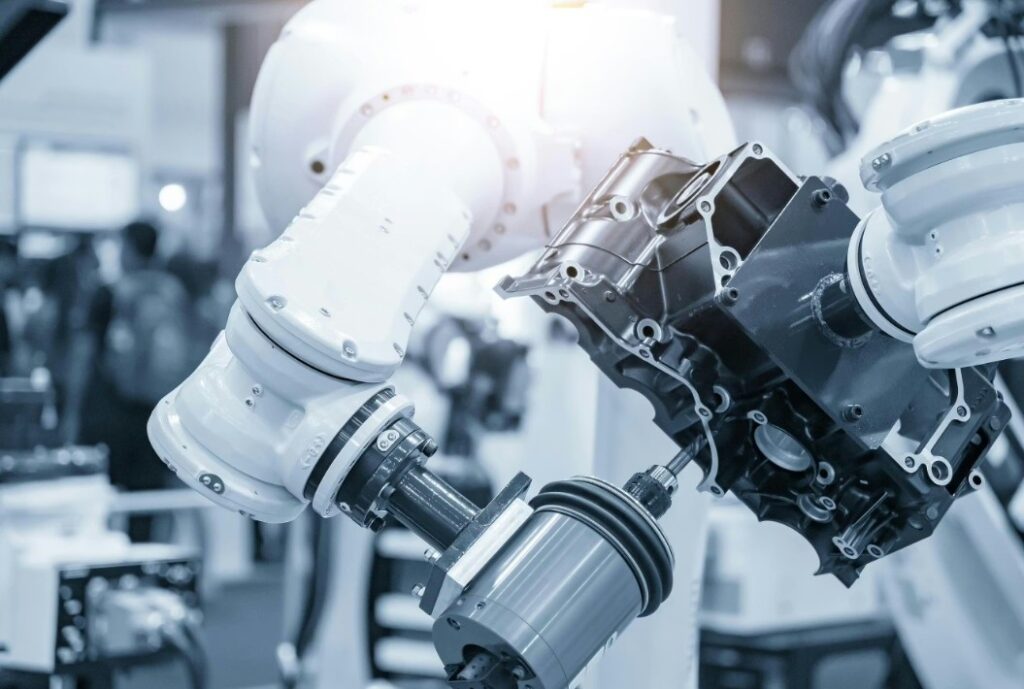
A robot’s performance is often judged by visible specifications like payload, reach, and repeatability. Yet much of its real-world behavior depends on a less visible component: the gearbox. This internal mechanism governs how motor torque translates into motion, influencing stability, precision, and durability over time, tells Machine Design.
One of the most important tradeoffs involves backlash versus lost motion. Backlash, the clearance between gear teeth, is easy to measure and often used as a proxy for accuracy. However, lost motion, which includes backlash along with elastic deformation and compliance, better reflects actual system behavior. A gearbox with low backlash can still feel unstable if stiffness is insufficient, leading to overshoot or slow settling.
Stiffness itself presents another tradeoff. Higher torsional stiffness improves positional accuracy and reduces settling time, but it can increase system sensitivity to shocks and raise cost or weight. Engineers must balance rigidity with the ability to absorb dynamic loads without compromising performance.
Dynamic response under load is equally critical. Gearboxes must handle varying forces during acceleration, deceleration, and direction changes. Designs optimized for steady motion may struggle with abrupt transitions, affecting cycle times and control tuning.
Wear and performance drift introduce longer-term considerations. Over time, material fatigue and micro-deformations alter gearbox behavior, leading to reduced precision and increased maintenance needs. Selecting a gearbox involves weighing initial performance against how that performance evolves during continuous operation.
Finally, integration and tuning complexity represent a practical tradeoff. Some gearbox designs demand more sophisticated control strategies to achieve desired performance, increasing setup time and engineering effort.
Rather than seeking a universally superior gearbox, the article emphasizes aligning these tradeoffs with the application. The right choice depends on task requirements, motion profiles, and lifecycle expectations, making gearbox evaluation a system-level decision rather than a component-level one.
