

Engineers are using 3D printing to make batteries that can be integrated directly into structures rather than attached as bulky blocks or cylinders. A recent IEEE Spectrum article describes how a former Formula 1 engineer co-founded a company that prints battery material into the unused spaces in devices and vehicles, maximizing energy storage and easing packaging constraints.
Conventional cells tend to be rectangular or cylindrical, making them difficult to fit into irregular shapes. In contrast, the company’s additive manufacturing platform, called Hybrid3D, prints the entire battery stack, including anode, cathode, separator, and casing, in situ without molds or tooling. That approach lets battery material conform to curves, hollows, and edges that are otherwise wasted volume in today’s devices.
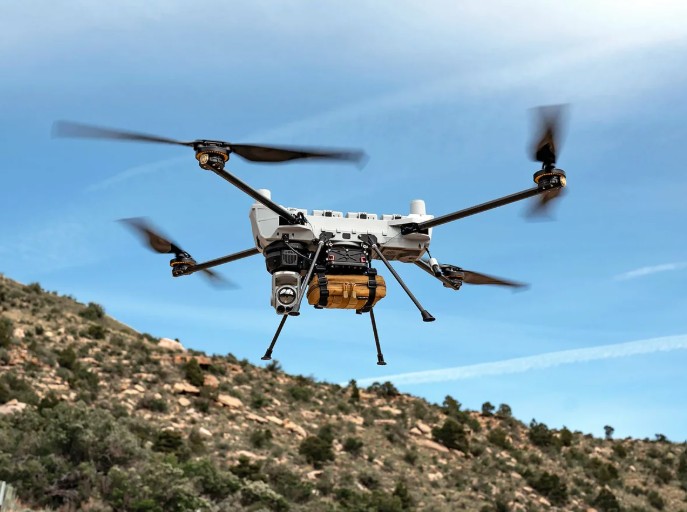
In early tests, printed batteries placed into a drone frame achieved about 50% higher energy density within the same space that previously held 48 standard cells, using roughly 35% more of the available volume. This could translate into longer flight times, smaller battery packs, or the ability to carry heavier payloads without increasing weight.
Beyond drones, this technology has implications for consumer electronics, wearables, and military gear with constrained space. Firms are racing to popularize conformal power sources that save space and simplify assembly, competing with major companies working on custom battery shapes using traditional methods. Printing could eventually replace costly tooling and complex production lines currently needed to make irregular-shaped batteries.
The Hybrid3D system can work with a variety of chemistries, including different lithium-ion formulations, and the platform’s developers say they are moving toward 3D-printed solid-state designs. That could offer safety and performance advantages over liquid-electrolyte batteries while retaining the flexibility of additive manufacturing.
If scaled for commercial production, 3D-printed batteries could shift how energy storage is designed and integrated across industries, making power supplies a seamless part of product architecture rather than discrete components.
