

As electricity demand reaches seasonal peaks during extreme summer heat and winter cold, heating and cooling systems place enormous pressure on power grids. According to the IEEE Spectrum article, space heating and cooling account for roughly half of global energy use, often forcing utilities to rely on expensive and more polluting power plants. A new generation of battery-powered air conditioning systems aims to address this challenge by shifting when electricity is drawn from the grid rather than reducing comfort.
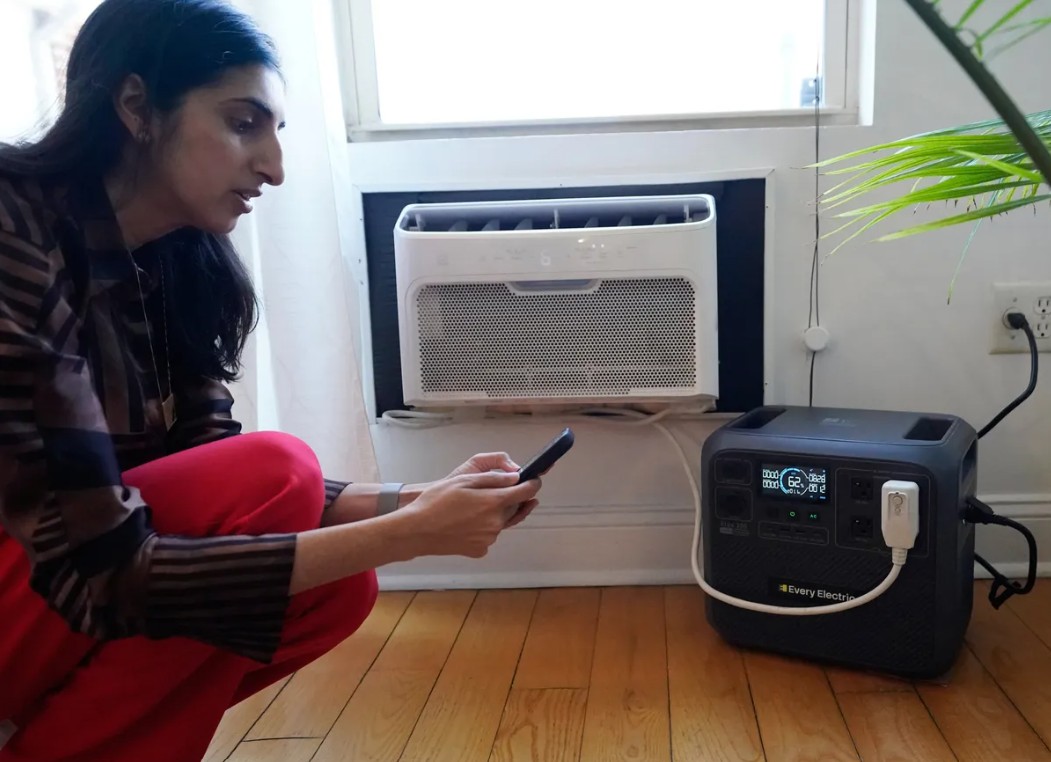
The article highlights New York startup Every Electric, which pairs plug-in air conditioners with portable 2-kilowatt-hour battery packs. These batteries charge when electricity demand is low and power air conditioners during peak-demand periods. Through software, thousands of these distributed batteries are connected into a virtual power plant, allowing the company to temporarily reduce grid demand without interrupting cooling. Participants receive the battery packs at little or no cost and earn rebates funded through agreements with utility company Con Edison, potentially offsetting an entire summer electricity bill.
Unlike traditional demand response programs that cycle air conditioners on and off through smart thermostats, battery-backed systems maintain indoor comfort while reducing stress on the grid. Utilities can even target specific neighborhoods experiencing localized demand spikes, with batteries capable of powering window air conditioners for up to 4 hours, depending on efficiency.
The article also examines a complementary approach from Carrier, which has developed residential heat pumps with integrated batteries. These systems automatically switch between stored energy and grid electricity, providing both heating and cooling while supporting grid stability. Pilot programs are underway across multiple U.S. climate zones in partnership with utilities to evaluate their performance year-round.
While portable battery systems are especially well-suited to renters and older air conditioning units, built-in battery heat pumps may deliver greater overall grid benefits because they operate throughout the year and consume more power. Together, these technologies demonstrate how residential cooling and heating equipment can evolve from passive energy consumers into active participants in a smarter, more flexible electric grid.
