

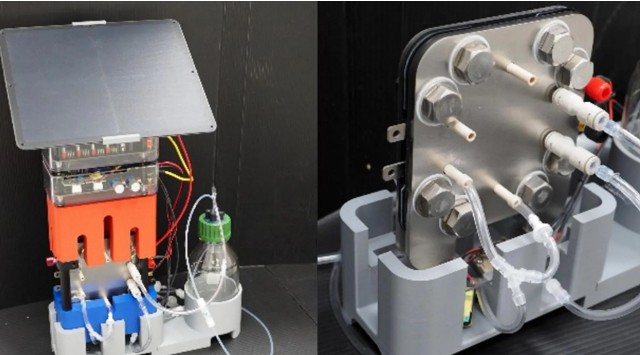
Researchers at Osaka Metropolitan University have developed a new artificial photosynthesis system that converts sunlight, water, and carbon dioxide into fuel without relying on batteries or complex control electronics. The innovation addresses one of the longstanding challenges in solar fuel production: maintaining efficient operation as sunlight intensity changes throughout the day, tells Science Daily.
Artificial photosynthesis seeks to mimic the natural process used by plants, transforming solar energy into chemical energy that can be stored and used later. In this system, the primary fuel product is formic acid, a versatile chemical that can serve as both an energy carrier and a fuel source. The process depends on an electrolyzer, which converts electricity generated by solar cells into chemical energy.
Conventional artificial photosynthesis systems typically use Maximum Power Point Tracking (MPPT) technology to optimize solar cell performance under changing light conditions. While effective, MPPT systems often require batteries and additional electronic components, increasing system complexity, cost, and maintenance requirements.
To overcome these limitations, the research team redesigned the electrolyzer itself. Their new device incorporates a specially engineered solid electrolyte that automatically adjusts its electrical characteristics in response to temperature changes caused by varying sunlight levels. As sunlight increases, the electrolyzer heats up, reducing its electrical resistance and allowing current to flow more efficiently. This self-regulating behavior allows the system to perform many of the functions typically handled by MPPT technology without external batteries, power converters, or control electronics.
Outdoor testing demonstrated that the system could maintain stable production of formic acid from water and carbon dioxide despite fluctuations in sunlight. The technology was also showcased at Expo 2025 Osaka, where it generated enough formic acid to power a miniature diorama, providing a practical demonstration of its capabilities.
Published in EES Solar, the study highlights a simpler approach to solar fuel production. By integrating self-adjusting functionality directly into the electrolyzer, the researchers have reduced the need for supporting electronics while maintaining efficiency. The development could help advance renewable energy systems that store solar energy in the form of chemical fuels, supporting future household and industrial applications.
