

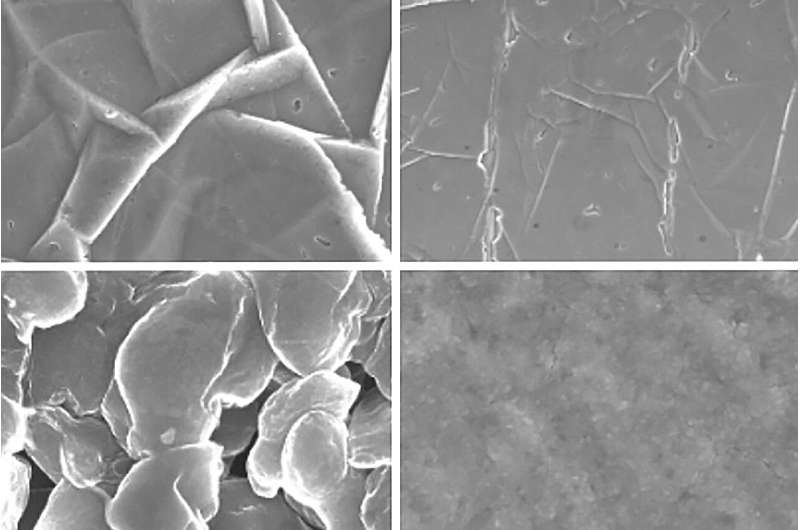
Batteries spend more than 70% of their lives sitting idle, yet research has largely focused on their performance during charging and discharging. Two studies led by engineers at the UCLA Samueli School of Engineering now examine calendar aging, the gradual deterioration that occurs when batteries are neither charging nor operating, tells Tech Xplore.
The researchers investigated next-generation metal-anode batteries, which use materials such as lithium, sodium, aluminum, magnesium, and zinc. These metals are being explored for their potential to provide alternatives to conventional lithium-ion technology with higher energy-storage capabilities. However, strong cycling efficiency does not necessarily mean a battery will remain stable during periods of inactivity.
In one study, published in Joule, researchers compared lithium, sodium, aluminum, and magnesium anodes. Although all demonstrated high cycling efficiencies, lithium, sodium, and aluminum batteries lost roughly 10–20% of their capacity after sitting unused for two weeks. Magnesium lost less than 0.5%. Researchers attributed its stability to a naturally forming protective layer that limits corrosion during rest and reversibly dissolves when charging begins.
A second study, published in Nature Communications, focused on zinc batteries. Researchers discovered that water molecules surrounding dissolved zinc ions were particularly reactive and contributed significantly to corrosion. Conventional zinc electrolytes could lose more than one-third of battery capacity after only 24 hours of inactivity.
The team addressed this problem by developing an ultra-dilute electrolyte with specific additives. The approach reduced capacity loss to less than 1.5% after 24 hours while maintaining stable performance over thousands of cycles.
Although still at the proof-of-concept stage, the findings suggest that controlling electrolyte chemistry and protective electrode layers could extend battery lifetimes. The research could eventually improve energy storage for electric vehicles and power grids.
