

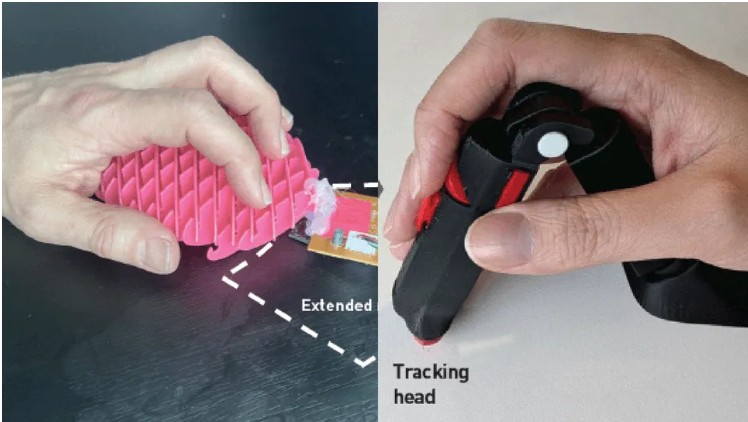
A recent study out of KTH Royal Institute of Technology explored radical alternatives to the standard computer mouse in hopes of reducing repetitive strain injuries, reports Live Science. Two prototypes stood out: the “Fleximouse,” which uses a squeezable mesh body so users move the cursor by applying grip pressure rather than sliding the device, and an A-frame vertical mouse with a hinged design that aligns the wrist and forearm more naturally. Both designs aim to reduce the constant wrist repositioning and unnatural arm postures that many users tolerate with conventional mice.
Conventional mice often force us to lift, stretch, or twist the wrist to reach screen corners, to reposition the device, or to adjust the grip. These motions, especially over long periods, are associated with discomfort, chronic pain, or diagnosed repetitive strain injuries (RSI). The study argues that ergonomic tweaks such as slanted grips or trackballs haven’t fully solved the problem because they still assume a rigid shell and encourage wrist and forearm bending.
In tests involving 28 frequent mouse users (some with chronic discomfort or diagnosed RSIs), both new designs reduced the amount of wrist lift and repositioning required. Participants appreciated the ergonomic benefits, especially getting relief from awkward hand positions. But feedback was mixed: some missed familiar features such as scroll wheels, others reported that the fit wasn’t perfect, i.e., hand size and grip style affected comfort.
Researchers see promising potential in personalized or adjustable versions of these designs, akin to custom-fitted gloves or shoes. Advances in soft robotics, flexible components, and 3D printing make creating adaptive, body-friendly mouse designs more feasible than ever. Still, more refinement is needed so that novel features don’t come at the expense of usability.
These new prototypes suggest that the classic computer mouse may be due for a rethink. Minor design shifts, such as soft bodies, vertical grips, and less wrist flexion, could go a long way toward reducing the kinds of strain many users accept as normal. If perfected and made standard, they might make hours at the computer less of a pain.
