

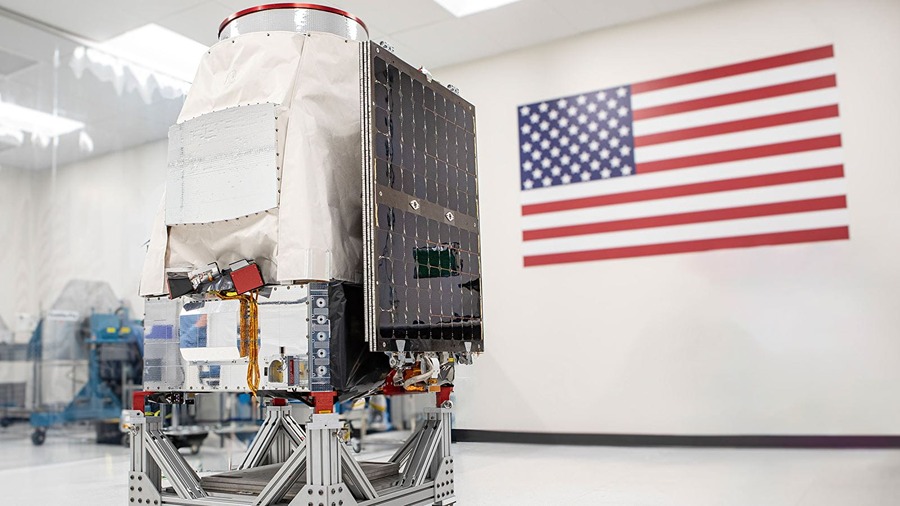
LAFAYETTE, CO, Jan 20, 2026 – A Saturn-200 minisatellite developed by Blue Canyon Technologies has launched in support of NASA’s Pandora mission, which will analyze exoplanet atmospheres and host star activity. The spacecraft will capture atmospheric signals and evaluate how stellar variability influences those measurements.
Pandora mission will observe transits across at least 20 planets to study their atmospheres. As a planet crosses its host star, its atmosphere modifies starlight through absorption and scattering. Astronomers analyze these signals to determine atmospheric composition and evaluate whether conditions could support life. Pandora will focus on detecting planets with atmospheres rich in hydrogen or water.
“Pandora features the largest telescope payload ever integrated onto a Blue Canyon spacecraft,” said Chris Winslett, general manager of Blue Canyon Technologies. “Our Saturn-class platform, equipped with advanced guidance, navigation, and control systems, will provide the precision pointing and stability critical to the success of this important mission.”
Led by NASA’s Goddard Space Flight Center and managed by Lawrence Livermore National Laboratory, Pandora operates under NASA’s Science Mission Directorate. Blue Canyon Technologies supplied the bus platform, integrated the launch vehicle, and completed post-launch commissioning. With Pandora’s successful launch, Blue Canyon has launched 87 spacecraft.
Source: Blue Canyon Technologies
About Blue Canyon Technologies

Blue Canyon Technologies, a subsidiary of Raytheon Technologies, designs and builds small satellites and spacecraft components for commercial, civil, and defense missions. Founded in 2008, the company is based in Lafayette, CO. Blue Canyon offers CubeSats, microsatellites, ESPA-class platforms, and internally developed subsystems, including attitude control systems, reaction wheels, star trackers, and power modules. It also provides mission services through its operations center. The company’s flight-proven hardware supports missions in low Earth orbit, geosynchronous orbit, lunar, and deep-space environments. Its customers include NASA, the U.S. Air Force, DARPA, academic institutions, and commercial space operators. Since its founding, Blue Canyon has launched 87 small satellites and more than 2,700 components across missions spanning multiple orbital regimes, including interplanetary trajectories.
