

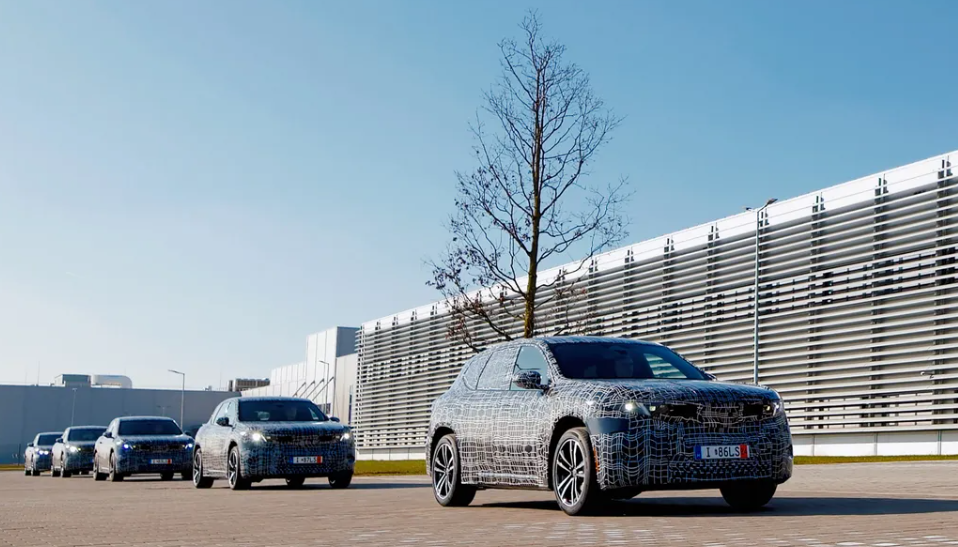
BMW’s Neue Klasse, beginning with the new iX3 SUV, is built around a sustainability-first philosophy that tackles the full life cycle of an EV—from materials and manufacturing to usage and recycling, tells this IEEE Spectrum article.
Battery and Materials Innovation
- BMW’s sixth-generation (Gen6) in-house cylindrical batteries boost energy density by ~20% and charge 30% faster compared to Gen5 packs. They use a cell-to-pack integrated architecture, reducing weight and parts count.
- Around 50% of lithium, nickel, and cobalt in these batteries is sourced from recycled materials, helping decrease overall carbon footprint by ~42% per kilowatt-hour.
Sustainable Production
- The Debrecen, Hungary, plant where the Neue Klasse iX3 is built is designed to run on 100% renewable electricity, with onsite solar covering up to 25% of energy needs (with storage for heat generation).
- CO₂ emissions during assembly are extremely low—just ≈0.1 ton per car—about two-thirds lower than other BMW facilities.
Lifecycle Emissions and Efficiency
- Across a 200,000 km lifetime, the Neue Klasse iX3 reduces its total carbon footprint by ~34% versus its predecessor when charged with typical European electricity; if charged exclusively with renewables, the “break-even” point occurs after just 17,500 km—less than 11,000 miles.
- Operational efficiency has improved 20%, owing to aerodynamic design, lower rolling resistance, and advanced powertrain systems (BMW EfficientDynamics).
Circular Design
Approximately one-third of the iX3’s materials are recycled: seat fabrics from recycled PET bottles; door and console components molded from marine plastics; and structural aluminum parts with up to 80% secondary material content.
BMW’s Neue Klasse initiative addresses critics by halving production emissions, cutting lifecycle CO₂ emissions significantly, and integrating circular materials—all while improving battery efficiency and minimizing carbon payback. It’s a strong, transparent response to doubts about EV sustainability.
