

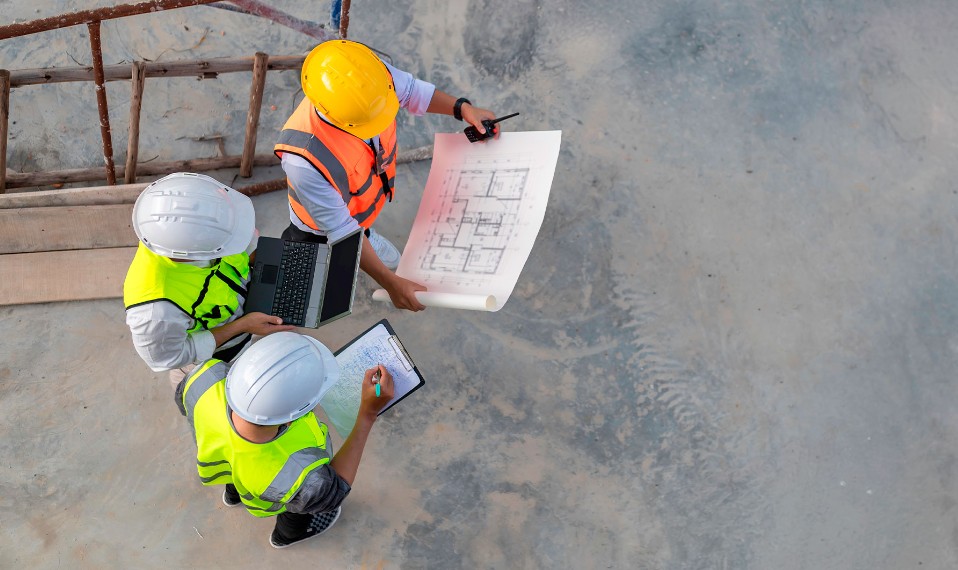
Construction has long been framed as a digital transformation story, driven by BIM, reality capture, and AI-powered tools. Yet the article from AEC Magazine highlights a persistent reality: on-site work still revolves around printed drawings.
Despite advances such as drones, SLAM scanning, and mixed reality, much of the decision-making on construction sites happens over large-format paper plans. This creates a disconnect between fast-evolving digital models and static physical documents, often leading to miscommunication, outdated information, and costly rework.
HP’s approach does not attempt to eliminate paper but instead aims to connect it more tightly to digital workflows. Its platform, HP Build Workspace, serves as a cloud-based environment for managing drawings, tracking revisions, and coordinating teams. Users can annotate plans, assign tasks, and attach contextual information directly to specific locations within drawings, ensuring that feedback remains structured and traceable.
A key feature is AI-driven vectorization, which converts scanned or PDF drawings, including those with handwritten notes, into CAD-editable files. The system can identify architectural elements such as walls, doors, and windows, placing them into organized layers. This capability is particularly valuable for refurbishment projects, where legacy paper drawings often lack digital counterparts.
Version control is another critical component. The platform maintains a history of drawing revisions and allows users to compare changes visually through overlays. This helps teams verify updates, prevent scope loss, and ensure alignment across stakeholders.
HP is also extending integration across hardware and site operations. Connected printers and scanners feed data directly into the platform, while tools such as SitePrint aim to translate digital layouts into precise physical markings and eventually capture site data back into the system.
Rather than replacing existing ecosystems such as BIM coordination platforms, HP positions its solution as complementary, ensuring that 2D drawings remain linked to a single source of truth.
The broader shift is pragmatic. Construction’s future may be digital, but its present is hybrid. By synchronizing paper and data, HP’s strategy addresses the real conditions of job sites, aiming to reduce friction between design intent and physical execution.
