

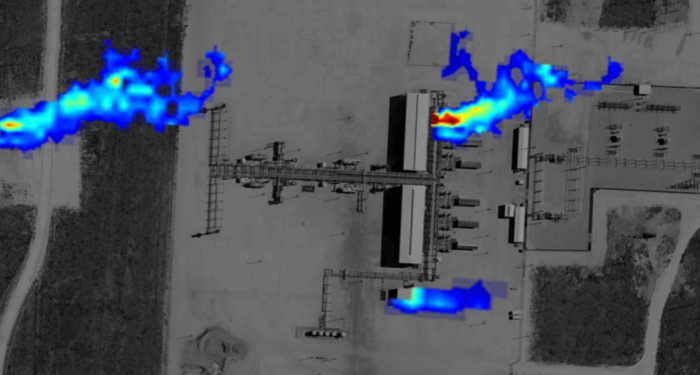
Methane leaks cost the U.S. natural gas industry about 3% of its production every year, which is roughly USD 1 billion in lost revenue. Besides economic loss, methane is a powerful greenhouse gas, making leaks an environmental hazard.
MIT Lincoln Laboratory has teamed up with Bridger Photonics to bring advanced lidar technology to bear on this problem. The heart of the system is an improved optical amplifier, specifically a slab-coupled optical waveguide amplifier (SCOWA) tuned to the infrared wavelength of 1.65 microns, where methane strongly absorbs light. This amplifier boosts laser power so lidar can detect invisible methane plumes from useful altitudes, tells MIT News.
The result is “Gas Mapping Lidar,” a sensor package that can be mounted on small aircraft or drones. It captures not just presence but concentration and leak rate of methane escaping from infrastructure such as pipelines, wells, or other gas facilities. Because of the SCOWA amplifier, the lidar unit is about 10 to 50 times more capable than many other airborne sensors currently used.
Wider adoption is underway. Nine of the top ten natural gas producers in the United States are now using Bridger’s Gas Mapping Lidar. It is helping companies find and repair leaks more efficiently. Regulators have also taken note: in January 2025, the U.S. Environmental Protection Agency approved the technology.
MIT’s contribution was critical in developing the laser amplifier that made this leap possible. The collaboration shows how lab-scale research (in optical emission and laser physics) can scale into field-ready tools with big environmental and economic impact.
