

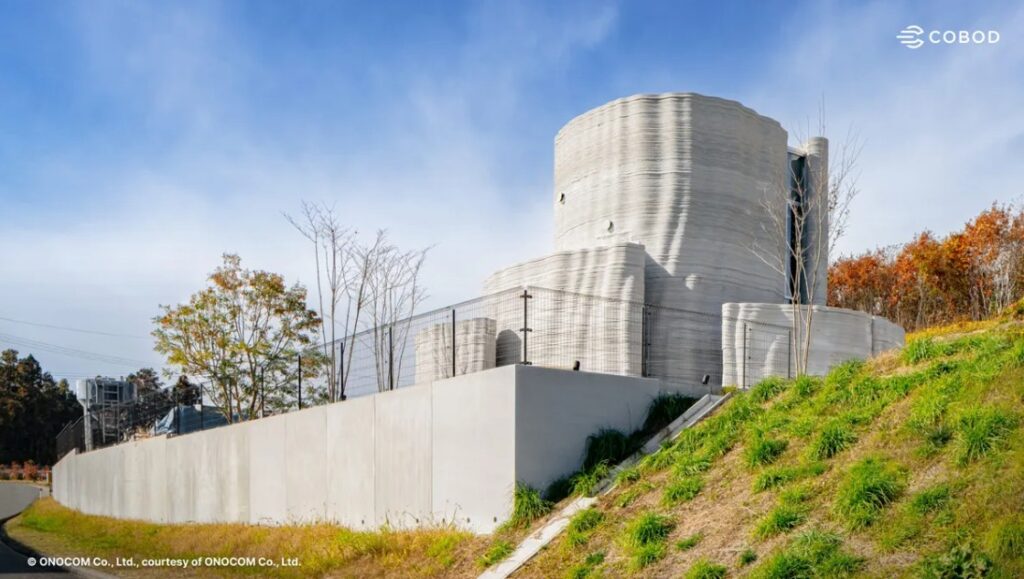
Japan has completed what is believed to be the first government-approved two-story 3D-printed house designed to meet the country’s strict seismic standards. Built in Kurihara City in Miyagi Prefecture, the structure represents an important milestone for large-scale additive manufacturing in construction, particularly in earthquake-prone regions, tells Tom’s Hardware.
The project combined the expertise of several organizations. Architectural firm Onocom contributed the distinctive cave-inspired design, while construction company Kizuki Co., Ltd. handled the on-site building process. The house itself was produced using a large-scale construction printer from the Danish company COBOD, a developer of 3D construction printing systems.
Previously, 3D-printed buildings have been limited mostly to small structures or single-story homes. Achieving full regulatory approval for a two-story dwelling in Japan, therefore, marks a major advancement. The country’s building codes impose rigorous seismic requirements, meaning the structure had to demonstrate both structural integrity and precise engineering before receiving certification.
A central innovation in the project is the use of “multifunctional wall” elements produced in a single printing step. These walls integrate multiple layers that combine architectural form, structural reinforcement, and internal space for utilities. By embedding these features directly into the printed structure, the design reduces the need for additional formwork and extensive post-construction work.
The construction process also highlighted several broader advantages of 3D construction printing. Printing the structural elements directly from digital designs can lower transportation needs for building materials, reduce carbon emissions, and improve consistency in the final structure. The technology also allows architects greater design freedom, enabling organic forms such as the cave-like geometry used in this project.
The project demonstrated the resilience of the printing system under varying environmental conditions. Early components were produced during winter temperatures below 10°C, while the main structure was completed in summer heat approaching 35°C. Engineers adjusted material handling and process controls to maintain print quality under both conditions.
As the construction industry searches for faster, more sustainable building methods, the successful completion of a fully compliant two-story printed home suggests that additive manufacturing may soon become a viable option for housing in challenging seismic environments.
