

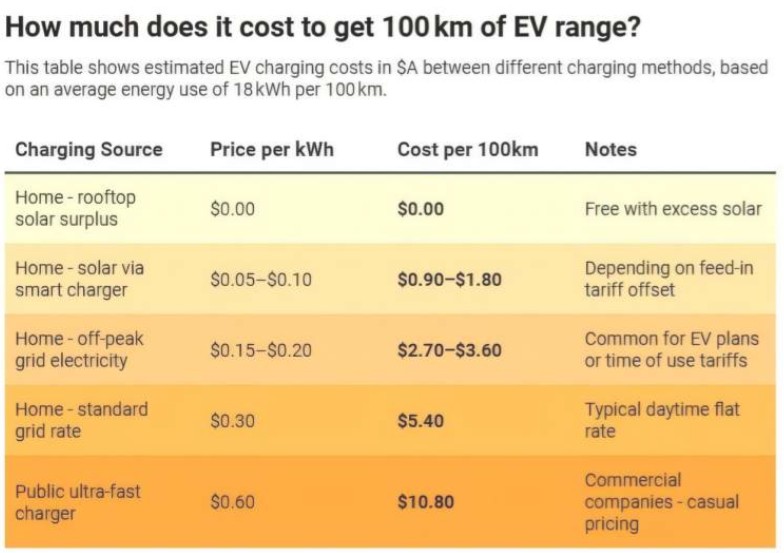
The cheapest way to charge an EV is almost always at home—especially if you can tap into rooftop solar or take advantage of off-peak electricity rates, tells this Tech Xplore article. In Australia, rates as low as 10 ¢/kWh are possible via excess solar power—making a full 60 kWh charge cost just around A$6, enough to drive 300–400 km. By contrast, ultra-fast public chargers can cost up to 60 ¢/kWh, making the same charge cost A$36—still cheaper than filling a petrol car for the same journey.
There are three main charging levels:
- Level 1 (Trickle): Plugs into a standard outlet and adds about 10–15 km of range per hour—ideal for overnight top-ups.
- Level 2 (Top-up): Requires a home wallbox or public destination charger; it adds ~40–120 km per hour and strikes a balance between speed and cost.
- Level 3 (Rapid): Ultra-fast public charging delivering 150–300 km per hour, but at a higher cost.
Home charging wins on value, especially for homeowners with off-street parking. Installing a Level 2 charger costs A$1,000–2,000, plus installation, but using off-peak grid power (~20 ¢/kWh) or solar drastically lowers ongoing costs.
However, not everyone has convenient home charging access—like apartment dwellers or regional users. In those cases, reliance on public chargers means higher costs and less predictability. To bridge the gap, community chargers, standardized pricing, smart-grid incentives, and government grants—such as those available in New South Wales—are vital to leveling access.
A smart, cost-efficient approach to powering your EV is to plan well, charge when rates are low, and home charge whenever possible.
