

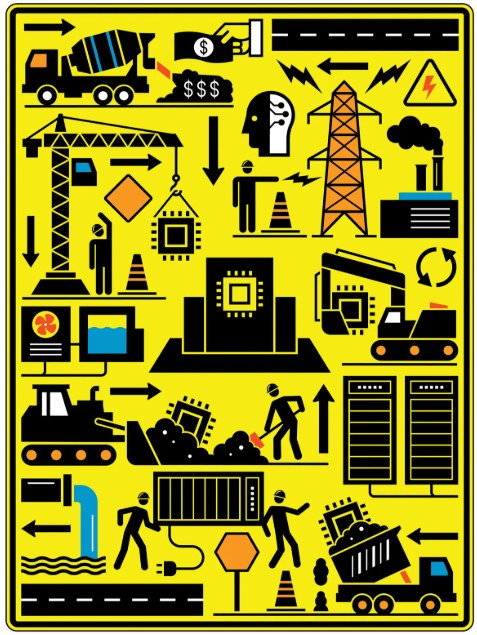
A feature in IEEE Spectrum explores the emerging reality of ultra-large data centers designed to meet the explosive growth of artificial intelligence. These facilities are no longer measured in megawatts but in gigawatts, with some projects projected to reach an astonishing 5 gigawatts of power capacity.
This scale reflects the immense energy requirements of modern AI systems, particularly large language models that rely on thousands of high-performance GPUs operating continuously. Traditional data center designs are struggling to keep pace, pushing engineers to develop entirely new approaches to power delivery, cooling, and physical infrastructure. Facilities at this scale function more like industrial power plants than conventional server farms.
One of the central challenges is energy supply. Delivering gigawatt-level power requires coordination with regional grids, dedicated substations, and, in some cases, on-site generation. These demands are creating bottlenecks, as utilities are not always equipped to provide such massive loads on short timelines. The result is a race between infrastructure development and AI-driven demand.
Cooling is another critical constraint. As computing density rises, removing heat from tightly packed hardware becomes increasingly complex. Engineers must design advanced cooling systems capable of handling extreme thermal loads while maintaining efficiency and reliability.
Physical construction also presents unique hurdles. The weight and density of modern AI hardware exceed traditional building standards, requiring reinforced structures and innovative layouts to support the equipment safely.
The article frames the 5-gigawatt data center as a symbol of a broader transformation in computing infrastructure. As AI continues to scale, data centers are evolving into massive, energy-intensive systems that blur the line between digital infrastructure and heavy industry. Meeting these demands will require not just incremental improvements but fundamentally new engineering solutions across power, cooling, and design.
