

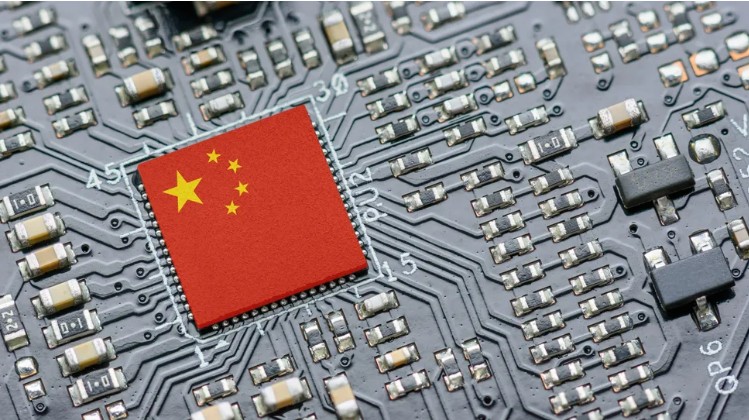
China has instructed major domestic tech firms, including Alibaba and ByteDance, to stop purchasing Nvidia’s AI chips, specifically the RTX Pro 6000D, and to cancel existing orders. The directive comes from the Cyberspace Administration of China (CAC), part of Beijing’s push to reduce dependence on foreign semiconductor technology and strengthen its own chip industry, says Tom’s Hardware.
The RTX Pro 6000D was introduced to the Chinese market under U.S. export restrictions, intended as a replacement for the previously banned H20 chip. But demand for the 6000D had been weak, even before the ban, partly due to performance limitations compared with grey-market alternatives and expectations that homegrown chip designs were catching up.
China claims that its domestic AI processors are now “on par” with Nvidia’s restricted products. Companies like Huawei, Cambricon, and others are said to have achieved comparable performance, especially in inference workloads. Meanwhile, Chinese firms are moving to adapt infrastructure to use home-grown chips and are investing heavily in chip design and manufacturing to support this shift.
Nvidia expressed disappointment, with CEO Jensen Huang commenting that the company is committed to serving the market if allowed, but acknowledges larger geopolitical agendas are in play. Importantly, the order is not only to stop future purchases but also to halt testing and verification of existing RTX Pro 6000D units.
From China’s perspective, the move strengthens its push for semiconductor self-reliance. But analysts caution that matching Nvidia’s software ecosystem, yield efficiency, and scale is non-trivial. The ban is viewed as part of a broader tech decoupling between the United States and China, where hardware, regulation, and supply chains are becoming strategic levers.
