

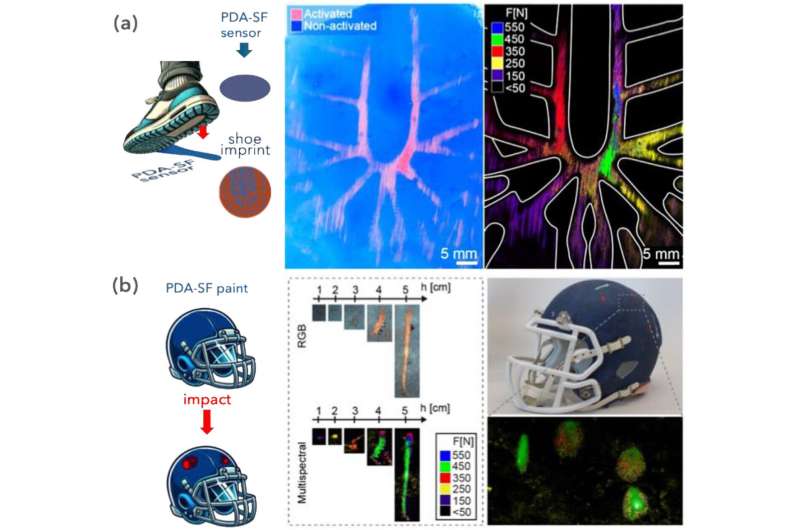
A new class of smart coating is redefining how engineers detect and measure physical impacts. Instead of relying on embedded electronics or external sensors, researchers have developed a paint that visibly changes color when struck, offering a direct and immediate way to assess both the location and intensity of an impact, tells Tech Xplore.
The innovation centers on materials engineered to respond mechanically and optically at the same time. When a surface coated with this paint experiences force, microscopic structural changes alter how it reflects light. The result is a color shift that corresponds to the strength of the impact, effectively turning the surface itself into a sensing system.
This approach removes the need for complex sensor networks, wiring, or power sources. That simplicity opens up a wide range of applications where traditional sensing methods are impractical or too costly. For example, sports equipment such as helmets could use the coating to identify potentially dangerous impacts linked to concussions. In logistics, packages coated with the material could provide a visual record of rough handling during transit.
Wearable uses are also under consideration. Insoles embedded with the coating could track pressure distribution in real time, offering insights for injury prevention or athletic performance. Because the response is immediate and visible, the technology could enable quick decisions without requiring data processing or specialized equipment.
Beyond convenience, the material introduces a new design philosophy: integrating sensing directly into structural or functional surfaces. This reduces system complexity while improving reliability, particularly in environments where electronics might fail.
The work highlights a broader trend in materials engineering, where intelligence is embedded at the material level rather than added through external systems. By merging sensing and structure, such coatings could reshape how engineers monitor stress, safety, and performance across industries.
