

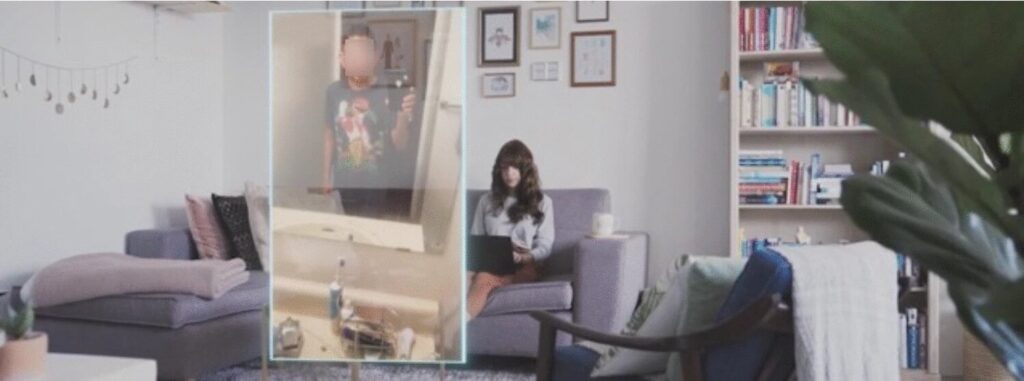
A team from the University of California, Santa Cruz investigated how people feel about social media content delivered via augmented reality (AR). They aimed to understand which contexts and formats users find comfortable for sharing and consuming AR social content, reports Tech Xplore.
The study focused on three variables: the spatial privacy context (private, semi-public, public), the dimensionality of content (2D vs. 3D), and whether the content is static or dynamic (images vs video). Using a survey of 110 participants evaluating 36 combinations, the researchers measured comfort levels for each scenario.
Results show a clear preference: users feel most comfortable seeing AR social media content in private spaces. Less comfort is reported when the content is public or semi-public. Secondly, users prefer 2D content over 3D, even though 3D can be more immersive, because 2D feels more familiar and less disorienting. Finally, for dynamic versus static content, video (dynamic) in AR was favored over still images. Motion tends to feel more natural in social media settings.
The authors note that much prior AR social media research assumes public or shared spaces as the default environment, but their findings suggest more attention is needed on how users perceive privacy in AR. They also caution that familiarity plays a role: people are used to consuming social media in 2D, so acceptance of 3D content may take time or require clearer distinctions between digital overlays and physical reality.
These insights have design implications. Developers building AR social apps might prioritize supporting private modes and 2D video overlays before pushing into full 3D interactivity. Over time, as users grow accustomed, more immersive formats might gain traction, but the transition needs sensitivity to comfort and context.
