

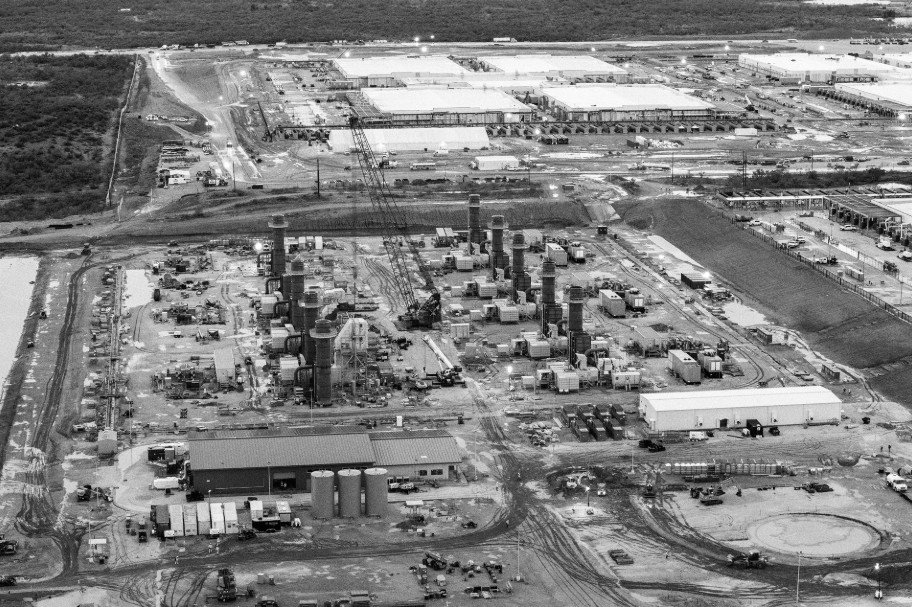
Data centers in the United States are now a major factor in the country’s expanding demand for gas-fired power plants, research from Global Energy Monitor shows. The amount of natural-gas capacity linked explicitly to data centers’ electricity needs jumped dramatically in the last two years, rising from just a few gigawatts in early 2024 to nearly 97 gigawatts by the end of 2025. That represents a roughly 25-fold increase and accounts for more than a third of the new gas capacity proposed nationwide. If all projects currently in the pipeline proceed, the U.S. gas fleet could grow by nearly 50%, adding about 252 gigawatts to the existing roughly 565 gigawatts of gas-fired capacity, tells Wired.com.
Data centers require reliable, around-the-clock electricity. Utilities and developers are responding to this surge by planning new gas power plants and, in some cases, extending the life of older coal facilities to meet local load. Natural gas remains a preferred choice for developers because it can supply consistent baseload power that intermittent renewables, such as wind and solar, often can’t match without large-scale storage. In addition, federal and state policies have tended to support rapid data center deployment and ease regulatory constraints on fossil fuel infrastructure in recent years.
While gas plants emit less carbon dioxide than coal when burned, they still contribute significantly to greenhouse gas emissions. Methane leakage during production and transport adds another layer of climate risk, since methane traps heat much more effectively than CO₂ over short time frames. Critics argue that the current trajectory, driven in part by AI and cloud computing growth, could lock in new fossil fuel infrastructure that undermines long-term decarbonization goals.
Some analysts and energy planners note that not all proposed gas projects may be built. Grid limitations, improvements in data center efficiency, and turbine supply shortages could slow development. Nonetheless, even a portion of the proposed gas generation would substantially increase emissions and lock in decades of fossil fuel use unless cleaner alternatives are integrated.
