

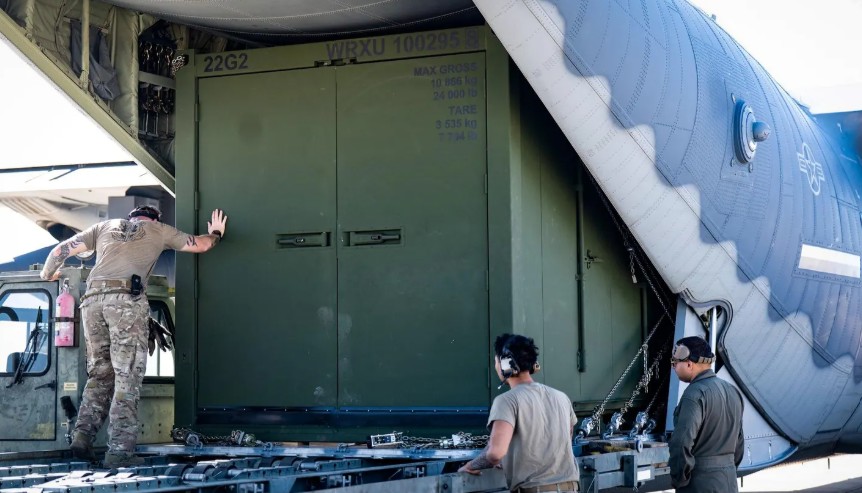
The defense sector is rapidly scaling up 3D printing, or additive manufacturing, from experimental promise to frontline deployment, transforming how the U.S. military produces equipment and manages supply chains. After years of research and development, the technology is moving into industrial-scale use with new mobile factories and hardened production tools that can make parts close to where they are needed, greatly reducing logistical complexity and lead times, tells this article from Forbes.
One standout example is Firestorm Labs’ “xCell”—a 3D printing system compact enough to fit inside a standard shipping container yet capable of producing components such as drone airframes on-site for the Air Force. By printing modular unmanned aerial systems near forward operating zones or maintenance depots, commanders can bypass long waits for parts from distant supply chains.
Defense leaders and industrial players such as EOS, Stratasys, and Nikon Advanced Manufacturing say 3D printing’s shift into defense manufacturing reflects broader forces reshaping military logistics and production. Geopolitical tensions, supply chain fragility, and the rapid pace of adversary innovation are pushing the Pentagon to adopt technologies that enable faster development cycles, on-shore production, and greater resilience. Funding and policy changes are accelerating this shift, with record defense budgets including dedicated lines for additive manufacturing programs.
Startups and established manufacturers alike are expanding capacity and capabilities, including efforts to produce 3D-printed engines and swarm-class UAV components. This reflects a growing belief that additive manufacturing can ensure operational readiness by quickly delivering bespoke or replacement parts without relying on overseas suppliers.
Despite momentum, challenges remain. Industrial adoption requires certification standards, deep integration with existing defense acquisition systems, and consistent funding. Critics note that while defense spending on additive projects is growing—with billions budgeted—it is still a small fraction of overall military R&D.
Overall, 2025 appeared to be a turning point where 3D printing in defense was no longer a future concept but an emerging operational asset, promising greater agility, faster innovation, and new paradigms in military manufacturing.
