

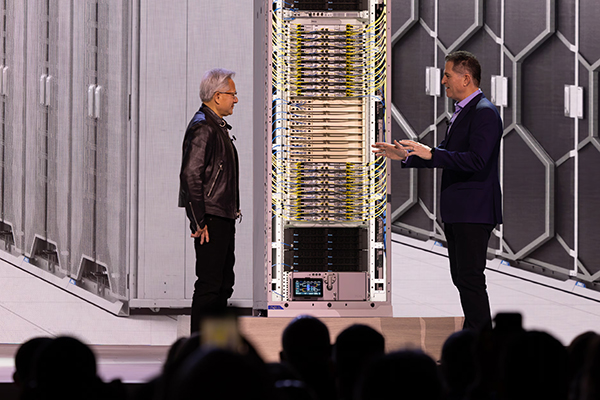
At Dell Technologies World 2026, conversations around artificial intelligence focused less on flashy demonstrations and more on the growing infrastructure pressures created by enterprise-scale AI adoption. According to Digital Engineering 24/7, Dell executives and industry partners emphasized that exploding data volumes, cybersecurity concerns, and the limitations of centralized cloud computing are driving interest in more localized and autonomous AI systems.
A major theme at the event was the rise of “agentic AI,” systems capable of independently executing tasks, making decisions, and coordinating workflows with minimal human intervention. While much of today’s generative AI depends heavily on cloud infrastructure, Dell argued that many enterprises are becoming uncomfortable sending large amounts of sensitive operational data to external platforms. Concerns around security, intellectual property protection, regulatory compliance, and latency are encouraging companies to keep more AI workloads inside their own infrastructure environments.
This shift is fueling interest in on-premises and edge-based AI deployments. Dell executives described a future where organizations run increasingly sophisticated AI models directly within factories, engineering environments, healthcare systems, and enterprise data centers rather than relying exclusively on hyperscale cloud providers. The approach could reduce latency, improve control over proprietary information, and lower risks associated with transmitting sensitive data across distributed networks.
The article also highlights the scale of the emerging data problem. Industrial systems, connected devices, simulations, sensors, and AI-generated outputs are producing enormous quantities of information that traditional infrastructure models struggle to manage efficiently. As organizations deploy autonomous AI agents across operations, the amount of machine-generated data may expand even faster.
Cybersecurity emerged as another critical concern. Agentic AI systems capable of autonomous decision-making introduce new risks because compromised models or corrupted data pipelines could potentially influence operational behavior on a large scale. Dell and its partners emphasized the need for secure architectures, governance frameworks, and infrastructure-level protections designed specifically for AI environments.
Another important trend involves the blending of AI with high-performance computing and enterprise engineering workflows. Manufacturing, simulation, and design applications are increasingly becoming AI-enhanced environments where models operate continuously alongside traditional computational systems.
The event ultimately reflected a growing realization that AI’s future may depend as much on infrastructure strategy as on algorithms themselves. Rather than moving everything to the cloud, many enterprises appear to be building hybrid environments where intelligence operates closer to the data, the machines, and the operational systems generating value.
