

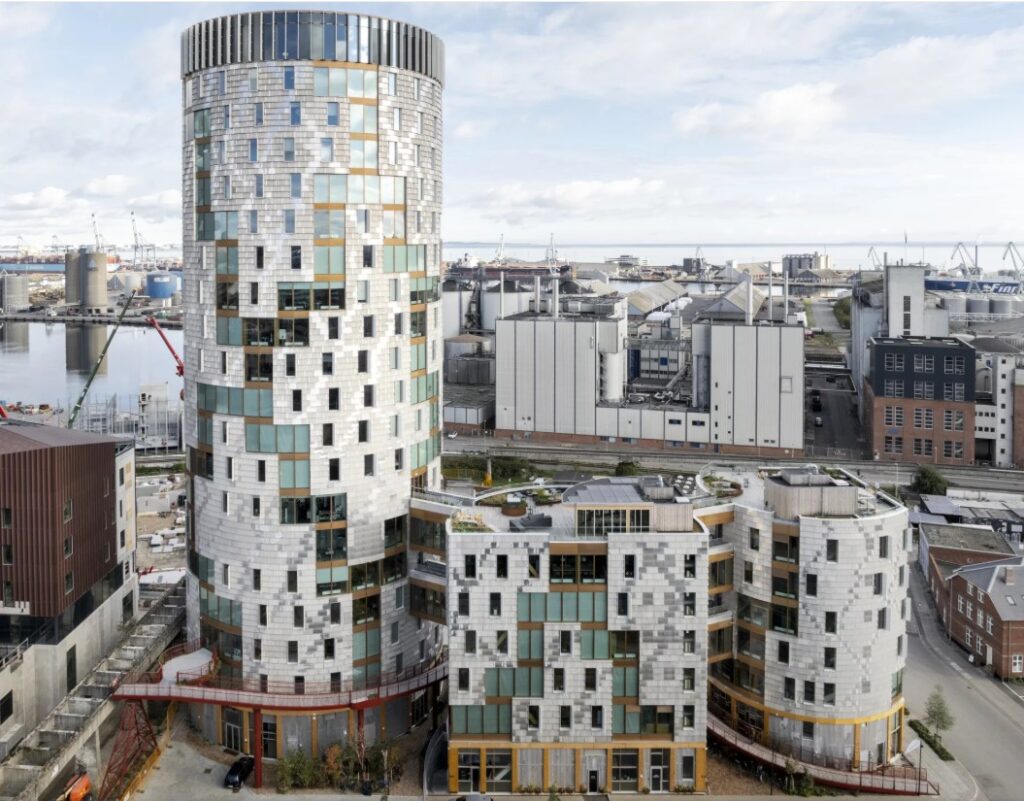
The TRÆ development in Aarhus, Denmark, represents a major step forward for timber high-rise construction and circular architecture. Reported by New Atlas, the project rises 78 meters (256 feet), making it Denmark’s tallest wooden building and one of the tallest timber towers in the world. Designed by Lendager Arkitekter, the complex combines engineered timber with an extensive range of reclaimed and recycled materials to reduce environmental impact while maintaining structural performance.
The project’s name, TRÆ, reflects multiple meanings in Danish: tree, timber, and three, referencing both the primary building material and the development’s three-building arrangement. The centerpiece is a 20-story tower accompanied by two smaller six-story structures. Most of the interior space is dedicated to offices, though the complex also includes shared amenities and hospitality areas designed around exposed wood finishes and natural textures.
Although promoted as a timber tower, the building uses a hybrid structural system. Cross-laminated timber floor slabs and glulam columns form the primary framework, while concrete cores and selective steel reinforcement provide stability, fire resistance, and compliance with strict building regulations. Engineers and architects faced major challenges because Denmark lacked local precedents for timber skyscrapers, forcing the team to navigate new safety and performance standards.
What distinguishes TRÆ most is its extensive use of reused materials. Reclaimed aluminum roofing sheets, discarded windows, reclaimed wood flooring, recycled lighting fixtures, and reused bricks appear throughout the project. Most notably, decommissioned wind turbine blades were transformed into solar-shading elements after extensive fire testing and material treatment. According to the project team, the building achieved a 26% reduction in carbon emissions compared to a conventional concrete equivalent.
The tower reflects the growing global momentum behind mass-timber construction. As architects search for alternatives to carbon-intensive concrete and steel, projects such as TRÆ demonstrate that large-scale urban buildings can merge structural ambition with material reuse and lower-emission design strategies.
