

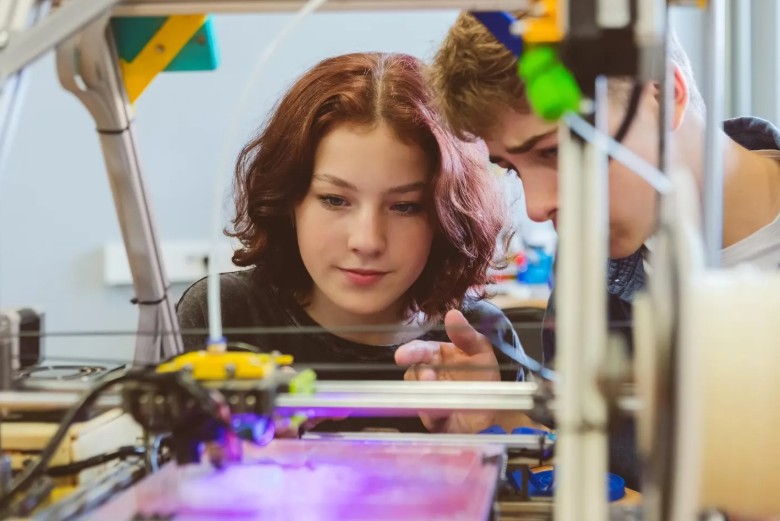
A Forbes analysis argues that making everyday products with a home 3D printer can be both economically and environmentally beneficial. The core idea is simple: distributed manufacturing shifts production closer to the user, reducing the need for global supply chains and the emissions tied to them.
Traditional manufacturing relies on centralized factories, often located far from consumers. Products must be shipped, stored, and transported multiple times before reaching users, adding significant energy costs. In contrast, 3D printing allows individuals to produce items locally, eliminating much of that transportation footprint.
Material efficiency is another key advantage. Additive manufacturing builds objects layer by layer, using only the material required for the design. This contrasts with subtractive methods that cut away excess material, generating waste. 3D printing also enables lightweight internal structures, such as honeycomb patterns, that maintain strength while reducing material use and associated energy consumption.
The availability of open-source design files further enhances the model. Consumers can download and print a wide range of products on demand, avoiding overproduction and excess inventory. This approach supports a more circular economy, where products are made only when needed and can be repaired or replaced easily.
However, the article acknowledges limitations. The environmental benefits depend on factors such as printer efficiency, material choice, and electricity sources. Poorly optimized printing or reliance on non-recyclable materials could offset some gains. Still, advances in recyclable filaments and distributed recycling systems are improving sustainability outcomes.
Overall, the article positions personal 3D printing as a shift in manufacturing logic. By decentralizing production and aligning it more closely with demand, it offers a pathway to reduce waste, cut emissions, and rethink how everyday products are made and consumed.
