

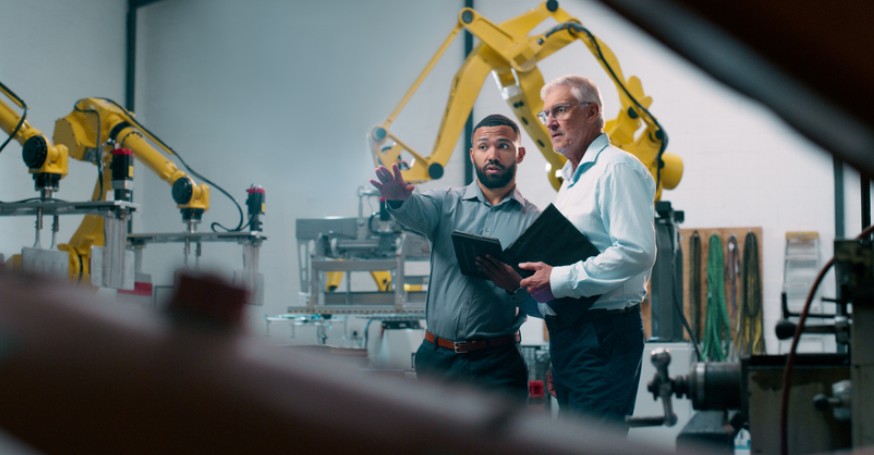
Source: Autodesk.The manufacturing industry is undergoing a profound transformation. For decades, traditional manufacturing relied on rigid processes, physical prototyping, and incremental improvements. Today, digital manufacturing—powered by advanced software, cloud connectivity, and simulation—is rewriting the rules. For computer-aided manufacturing (CAM) professionals, this disruption is not a threat but an opportunity to redefine workflows, reduce costs, and accelerate innovation.
From Static Processes to Dynamic Workflows
Traditional manufacturing was linear: design, prototype, test, and produce. Each stage consumed time, resources, and materials. Digital manufacturing integrates these steps into a continuous feedback loop where design, simulation, and production share data seamlessly. Tools such as digital twins and factory simulation software allow engineers to predict performance, validate processes, and adjust parameters in real time.
Instead of discovering flaws on the shop floor, CAM professionals can now run thousands of virtual trials within hours. This agility means production systems can adapt to new designs or market changes without costly downtime.
The Role of Advanced Software
CAD companies such as Siemens and Autodesk have been at the forefront of digital manufacturing. Siemens’ Xcelerator platform integrates CAD, CAM, PLM, and factory automation into one digital thread. Siemens bridges the gap between design, CAM programming, and real-world machining—a clear disruption to traditional siloed workflows. Autodesk is transforming how factories are conceived and operated with AutoCAD, Inventor, and Factory Design Utilities (FDU). By combining geometric accuracy with process simulation, Autodesk equips CAM professionals with tools to anticipate problems early and maintain high agility in production. For CAM specialists, these tools bridge design intent and machine execution, reducing errors between CAD and CAM environments.
Smarter, Connected Factories
Digital manufacturing extends beyond the workstation. Sensors, IoT devices, and cloud platforms collect shop-floor data in real time. Predictive analytics alert teams before equipment fails, and machine learning algorithms optimize cutting paths, tool wear, and energy usage. This connected ecosystem turns factories into adaptive systems that continuously learn and improve.
Impact on the Workforce
For CAM professionals, disruption comes with expanded roles. The future isn’t just about generating toolpaths; it’s about integrating simulation, optimization, and production feedback into a single, adaptive workflow. Skills in data analysis, cloud collaboration, and AI-enhanced machining are becoming as vital as expertise in G-code or tooling strategies.
A New Manufacturing Paradigm
Digital manufacturing disrupts traditional manufacturing by making it faster, smarter, and more resilient. Virtual prototyping replaces trial-and-error, connected machines enable predictive operations, and agile layouts reduce lead times. For CAM professionals, this shift is not the end of tradition but the beginning of a more dynamic era—one where design and production merge seamlessly into a continuous cycle of innovation.
