

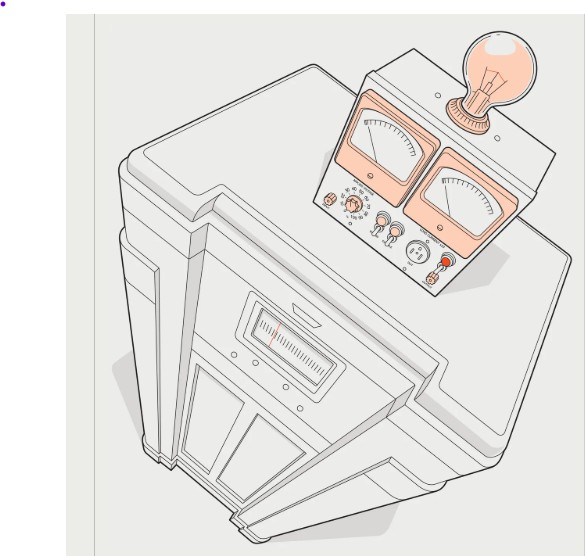
David Schneider walks us through why restoring vintage electronics isn’t just nostalgia; it’s a technical challenge that demands care, safety, and a smart approach. When he began repairing a classic vacuum-tube radio, he discovered that brittle wiring and decayed capacitors meant one false move could end in disaster. That’s when he turned to a dim-bulb tester—a deceptively simple yet ingenious safety tool, tells IEEE Spectrum.
Here’s the trick: a dim-bulb tester uses a light bulb (usually incandescent) wired in series with the device under test. The bulb naturally limits current: if something shorts in the vintage device, the bulb dims or glows, absorbing the surge instead of letting a destructive current pass through. By swapping bulbs with different wattages, you can control the current threshold, effectively giving you a built-in safety fuse that doesn’t require expensive electronics.
But Schneider didn’t stop at cobbling together a lamp and a socket. He built a full-featured tester with analog panel meters, a variable transformer, and a vintage aesthetic echoing old repair benches. He hunted down components from eBay and restored an old signal-generator case to house it. The result? A tool that blends elegant safety engineering with tactile authenticity.
He also integrates an isolation transformer into the setup, providing layered protection against electric shocks, especially important when dealing with tube-era gear notorious for lethal voltages.
In essence, this dim-bulb tester embodies what engineering in restoration looks like: it fuses electrical insight, practical risk mitigation, and a handcrafted spirit. It lets you revive electronics from the past, one careful step at a time, without letting arcane voltages or fragile components push you too far.
