

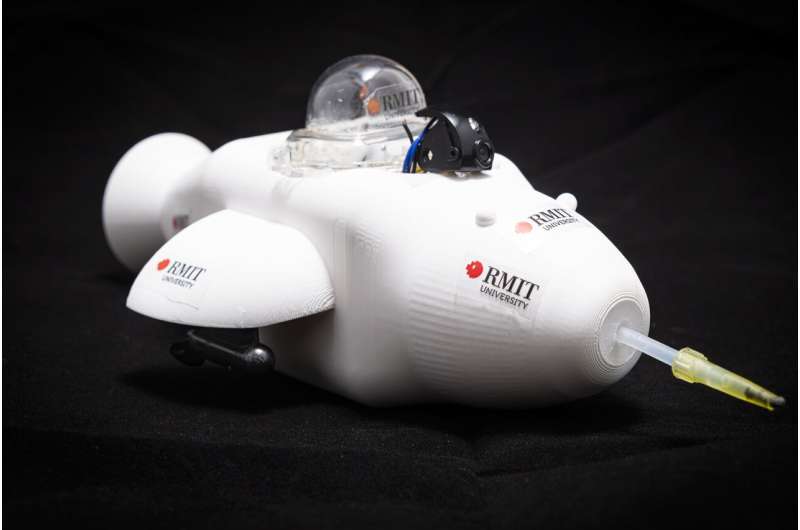
Engineers at RMIT University in Australia have developed a compact robotic device designed to help address the environmental damage caused by oil spills. The prototype, called the Electronic Dolphin, is roughly the size of a sneaker and shaped like a small dolphin. The remote-controlled minibot is designed to skim oil from the surface of water, offering a more precise and potentially safer method for responding to spills in sensitive marine environments, tells Tech Xplore.
Oil spills continue to threaten marine ecosystems, harming wildlife, damaging coastal habitats, and generating costly cleanup operations. Traditional cleanup techniques often rely on large mechanical equipment, chemical dispersants, or manual intervention by workers exposed to hazardous conditions. The Electronic Dolphin represents a different strategy: a small, maneuverable robotic platform that can be deployed quickly and directed to specific contaminated areas.
At the heart of the device is a specialized filtering system inspired by the microscopic structure of sea urchins. The filter features a coating covered with tiny spike-like structures that trap pockets of air. This architecture makes the material strongly water-repellent while simultaneously allowing oil to adhere to and be absorbed by the surface. As a result, the robot can selectively collect oil while rejecting water.
The filter sits at the front of the robot and works with a small pump that draws oil through the filter and into an onboard storage chamber. In controlled experiments, the prototype recovered oil at a rate of about two milliliters per minute with more than 95% purity, maintaining performance without becoming waterlogged. The reusable filter also avoids the harsh chemicals commonly used in conventional oil-spill materials.
Currently, the experimental robot can operate for about 15 minutes on a single battery charge, but researchers plan to scale the technology in future versions. Larger or autonomous robots could potentially collect oil, return to base stations to empty their tanks and recharge, and then redeploy automatically.
The project demonstrates how bio-inspired materials combined with robotics may offer new tools for environmental protection. If further developed, fleets of such devices could help responders manage oil spills more efficiently while reducing risks to human workers and fragile ecosystems.
