

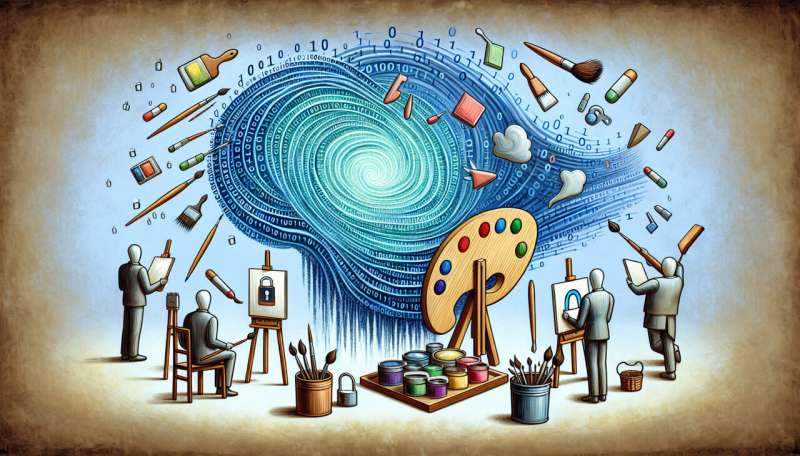
A study by researchers at the University of California, San Diego and the University of Chicago, to be presented at the October 2025 Internet Measurement Conference, examined how effectively visual artists can shield their work from AI crawlers. AI crawlers are automated agents that harvest images online to train generative AI tools.
This article on Tech Xplore highlights ongoing challenges visual artists face in safeguarding their creative work from AI-driven crawlers, despite the existence of protective technologies. Nearly 80% of surveyed artists had actively tried to prevent AI systems from training on their work: 66% used tools such as Glaze (which subtly alters images to mislead AI), about 60% shared only low-resolution images, and 51% significantly reduced their online sharing. In total, 96% expressed a desire for better tools to deter AI crawling. Although several tools are available to prevent AI scraping, such as image cloaking software (like Glaze), robots.txt protocols (a basic website protocol to block crawlers), and reverse-proxy solutions, visual artists often remain unaware or find these technologies difficult to implement effectively.
To address these gaps, the study emphasizes practical solutions for artists. One key recommendation is increasing awareness through straightforward educational resources and workshops to help creators understand basic protections such as robots.txt and metadata tagging. Moreover, simplifying the usability of advanced tools—such as reverse-proxy blockers—could significantly empower artists to better manage their online content without extensive technical knowledge.
Additionally, the research advocates for stronger industry-wide standards and regulations. Clearer legal frameworks could hold AI companies accountable for unauthorized scraping, encouraging compliance with artists’ protective measures. Collaboration between art platforms, technology developers, and policy-makers could create enforceable guidelines, ensuring AI training datasets respect artists’ rights.
Ultimately, empowering visual artists requires a multifaceted approach: making protective technologies more user-friendly, boosting awareness through education, and establishing clear, enforceable policies. These combined solutions can help artists regain control over their digital content in the age of AI.
