

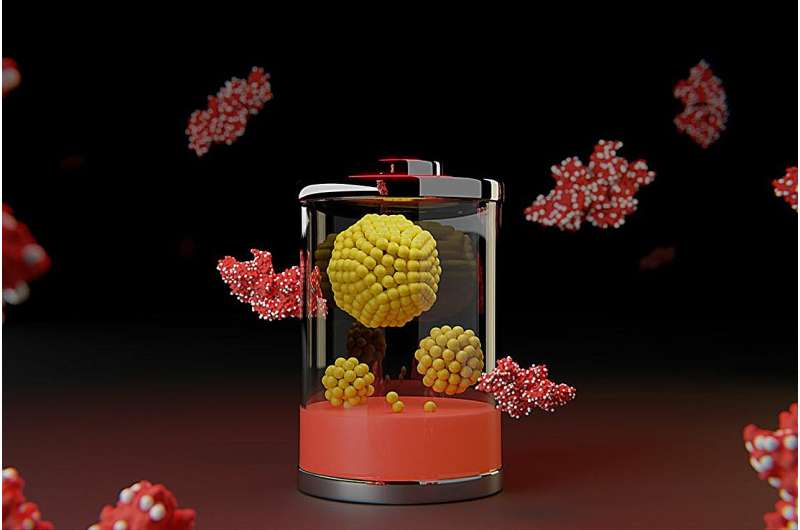
Scientists have revived a century-old idea from Thomas Edison by developing a prototype nickel-iron battery that combines rapid charging with exceptional cycle life, characteristics that could benefit renewable energy storage. The original nickel-iron concept, pursued by Edison in the early 1900s as a potential automotive battery, never gained widespread use due to cost and performance limitations. Researchers from the University of California, Los Angeles, working with international collaborators, drew on that historic design and updated it with modern materials and manufacturing techniques, tells Tech Xplore.
The researchers turned to biological templates to grow clusters of nickel and iron at the nanometer scale. Proteins that scaffold mineral growth in nature, similar to how bones and shells form, guided the assembly of tiny metal clusters with dimensions smaller than five nanometers. These clusters were then combined with graphene oxide, a two-dimensional carbon material, and processed through heating steps that converted the proteins into conductive carbon while stripping oxygen from the graphene. The result was a lightweight aerogel structure with a very high surface area, ideal for battery electrodes.
Testing showed that the prototype recharged in seconds and maintained performance through more than 12,000 charge-discharge cycles, a lifetime equivalent to more than 30 years of daily use. That durability and quick recharge rate suggest applications not in electric vehicles but in grid-scale support for renewable generation, such as storing excess solar power during the day for use at night. Because the technology uses abundant materials and relatively simple processing, it sidesteps reliance on rare-earth elements that challenge lithium-ion battery supply chains.
Though still in the research stage, this work points to a future for nickel-iron systems in sustainable energy infrastructure, revitalizing an old design with a blend of biological inspiration and nanoscale engineering.
