

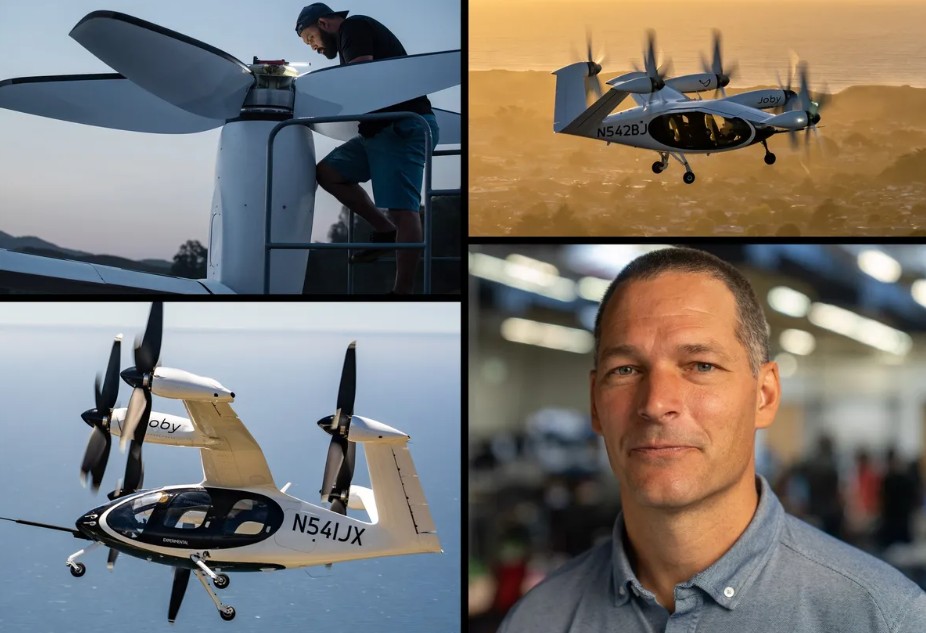
Urban air mobility is edging closer to everyday reality as Joby Aviation prepares to launch one of the world’s first commercial air taxi services in Dubai. The initiative represents a significant step toward realizing a long-promised vision of fast, on-demand aerial transport that bypasses congested city streets, tells IEEE Spectrum.
Joby’s aircraft is an electric vertical takeoff and landing vehicle designed to operate like a hybrid between a helicopter and an airplane. Equipped with six electric motors, it can take off vertically, transition to forward flight, and carry passengers across urban areas with reduced noise and zero operating emissions.
The Dubai deployment stands out for its integrated approach. The city is investing in a network of dedicated “vertiports” where aircraft can land, recharge, and board passengers. Initial locations include major transit and commercial hubs such as the international airport and key urban destinations, forming the backbone of a point-to-point aerial transport system.
Joby has secured an exclusive agreement with Dubai’s transport authorities, giving it a strong early lead in the global race to commercialize air taxis. This strategic move allows the company to advance operations in a regulatory environment that is more agile than those in many Western markets, where certification processes have slowed deployment.
Despite the progress, challenges remain. Reliable service will require tight coordination between aircraft performance, charging infrastructure, air traffic management, and passenger logistics. Initial operations are expected to be limited as the company transitions from testing to regular service, ensuring safety and system stability before scaling.
If successful, the technology could reshape urban transportation by drastically reducing travel times, particularly for airport transfers and high-traffic corridors. It also opens opportunities for sustainable mobility solutions, emergency response, and premium commuter services.
By combining electric propulsion, new infrastructure, and regulatory alignment, Joby’s air taxi network signals a broader shift in transportation design, where cities expand mobility into the air to meet growing demand.
