

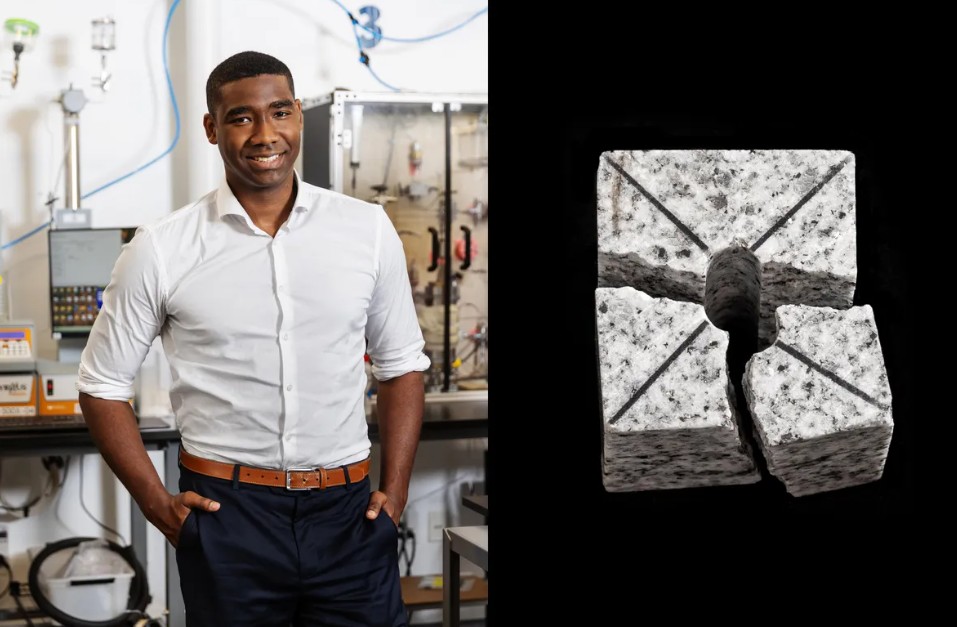
A new approach to clean hydrogen production could turn underground rock formations into large-scale hydrogen generators. Massachusetts-based startup Eden GeoPower is developing electrical reservoir stimulation, a technique that uses high-voltage pulses to fracture hard rock and create pathways for water to reach iron-rich minerals. The resulting water-rock reactions release hydrogen, tells IEEE Spectrum.
Known as stimulated geologic hydrogen or engineered hydrogen, the concept differs from searching for naturally accumulated underground hydrogen. Instead, developers aim to actively generate the gas by injecting water into suitable rock formations. This could expand production opportunities because the process mainly requires accessible iron-rich rocks rather than the combination of source, reservoir, and cap rocks needed for natural hydrogen deposits.
Eden initially explored electrical fracturing for geothermal energy. Its early direct-current tests worked in softer rock but struggled with the hard formations needed for hydrogen production. Engineers therefore switched to pulsed power, using custom Marx generators called Zeus and Thor to release bursts reaching several hundred kilovolts. These pulses create plasma channels inside moist regions of the rock. Their rapid expansion produces shock waves that fracture the surrounding material.
In a 2025 Colorado mine test, Eden increased the permeability of hard igneous rock tenfold. Laboratory experiments also produced up to four times as much hydrogen from electrically fractured samples as from unfractured ones. A field pilot specifically targeting stimulated hydrogen could begin late next year.
Commercial viability, however, remains uncertain. Hydrogen production depends on temperature, acidity, water and rock chemistry, microbes, and available iron. Other developers are investigating underground heating, catalysts, and carbon dioxide injection, while research suggests several techniques may ultimately need to work together.
Questions about production rates, purification, transportation, environmental effects, regulation, and cost also remain unresolved. Still, stimulated geologic hydrogen presents an intriguing possibility: producing low-carbon hydrogen underground by engineering the geological reactions that naturally create it.
