

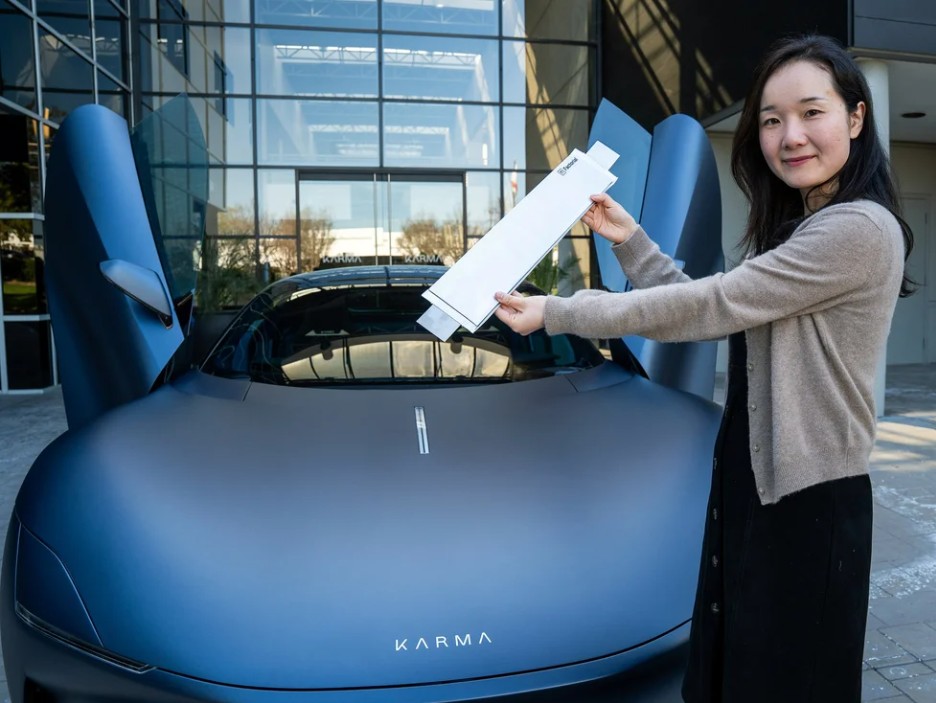
Karma Automotive plans to use next-generation solid-state batteries in its high-performance Kaveya electric coupe as early as late 2027. The Massachusetts-based battery maker Factorial Energy has developed cells labeled Electrolyte System Technology (FEST) that blend mostly solid electrolytes with a bit of fluid to ease manufacturing and yield faster charging and higher energy density than many current lithium-ion packs. These semi-solid cells have delivered about 391 watt-hours per kilogram in tests on a Mercedes EQS, significantly above typical EV battery figures and approaching levels that make long driving range more practical, tells IEEE Spectrum.
Factorial aims to go further with a pure solid-state cell named “Solstice” that uses a sulfide electrolyte, with projected energy densities near 500 Wh/kg. Solid electrolytes hold lithium ions in a solid matrix rather than through a flammable liquid, a change that could boost safety, improve fast-charging performance, and enable higher energy storage. Verified results from long demonstration drives have helped justify continued industry interest, even as broad commercialization remains challenging.
Karma’s Kaveya exemplifies the potential and current limitations of solid-state adoption. The limited-production, roughly $400,000 sport coupe will make tangible use of next-gen batteries while showcasing performance that includes high speed, rapid acceleration, and a design that leverages battery packaging to improve weight distribution and aerodynamics.
Industry experts note that replacing liquid electrolytes with solid materials can raise energy density, reduce fire risk, and enable the use of advanced anode materials such as lithium metal or silicon. But producing solid-state cells at scale continues to be difficult, with manufacturing yields, cost, and reliable long-term performance still under development. Many automakers and battery makers have made announcements about solid-state progress, but wide production for mainstream vehicles isn’t yet assured.
This article from IEEE Spectrum highlights both a real product roadmap and the broader promise and hurdles of solid-state battery tech.
