

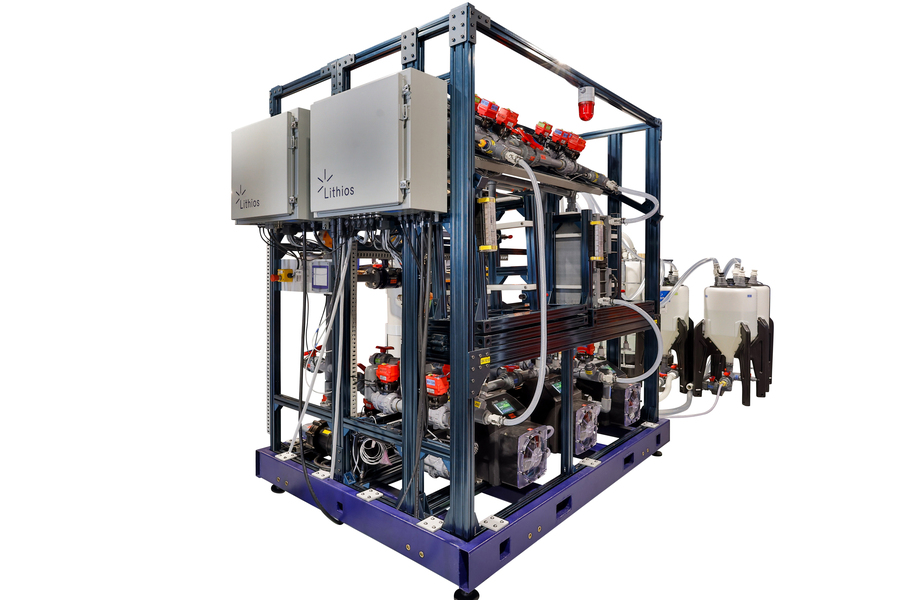
Lithios, a spin-out from Massachusetts Institute of Technology founded by Mo Alkhadra (PhD ’22) and Martin Bazant, is scaling a new electrochemical method to pull lithium from saline brines in the United States with far less energy and environmental impact than traditional mining techniques, tells MIT News.
Unlike the massive solar-pond evaporation processes used in South America, Lithios’s approach applies a voltage to a proprietary electrode material that selectively binds lithium ions from brine, then releases them via a reversal of current.
This startup is especially targeting the vast lithium resources in regions such as the Smackover Formation in Arkansas and East Texas, where traditional methods struggle due to low concentrations and high impurity loads.
Lithios has already operated a continuous pilot system processing real brine since June and shipped its first commercial-partner module to Arkansas. The company aims next year to run a version producing 10–100 tons of lithium carbonate annually, then scale to a full facility capable of 25,000 tons per year, potentially multiplying U.S. production many times over (current U.S. output is under 5,000 tons).
The broader significance: lithium is a cornerstone mineral for EV batteries and grid storage, yet the global refining chain is heavily Asia-centric; China currently handles around 65% of battery-grade lithium production. By launching this new technology domestically, Lithios contributes to mineral-supply security and brings advanced electrochemical separation techniques into mining.
It’s the application of battery-materials science, ion-transport theory, and electrode engineering to real-world extraction. If successful, this sets a precedent for chemical engineering-driven methods to recover low-grade resources at scale, merging sustainability with industrial minerals.
