

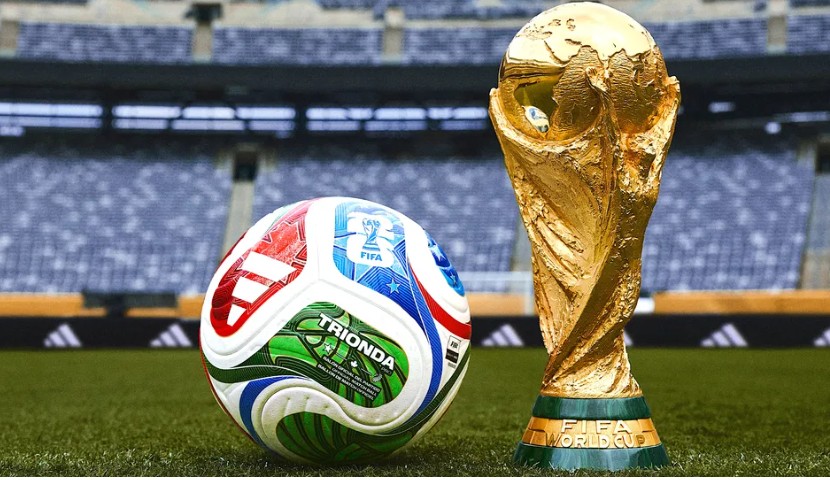
The official match ball for the 2026 FIFA World Cup has undergone extensive engineering validation to ensure that its flight characteristics remain stable and predictable during play. According to testing conducted by researchers and engineers, the new Adidas ball demonstrates consistent aerodynamic performance, reducing the erratic movement that has occasionally drawn criticism in previous tournament balls, tells Design News.
To evaluate the design, engineers subjected the ball to a series of wind tunnel experiments that measured its behavior under a variety of speeds and spin conditions. These tests focused on understanding the interaction between airflow and the ball’s surface structure. Even subtle variations in panel geometry, seam depth, and surface texture can significantly influence drag, lift, and overall flight stability. The goal was to create a ball that responds consistently to player input while maintaining the speed and performance expected at the highest levels of competition.
Researchers found that the ball’s aerodynamic characteristics remain stable across the range of velocities typically encountered during professional matches. This predictability is important because players rely on consistent ball movement when passing, shooting, and controlling the game. Unexpected changes in flight can affect accuracy and alter match outcomes, making aerodynamic reliability a critical design objective.
The development process reflects the increasing role of engineering and computational analysis in modern sports equipment. Advances in fluid dynamics, materials science, and precision manufacturing allow designers to optimize ball performance with far greater accuracy than in the past. Wind tunnel testing provides detailed data that can be used to refine surface features and validate computer simulations before the product reaches the field.
The article highlights that modern soccer balls are no longer simple sporting goods but highly engineered products. By combining laboratory testing with aerodynamic modeling, Adidas sought to ensure that the 2026 World Cup ball delivers a balance of speed, control, and consistency. The resulting design aims to provide athletes with a predictable playing experience while meeting the rigorous standards required for the world’s most prestigious soccer tournament.