

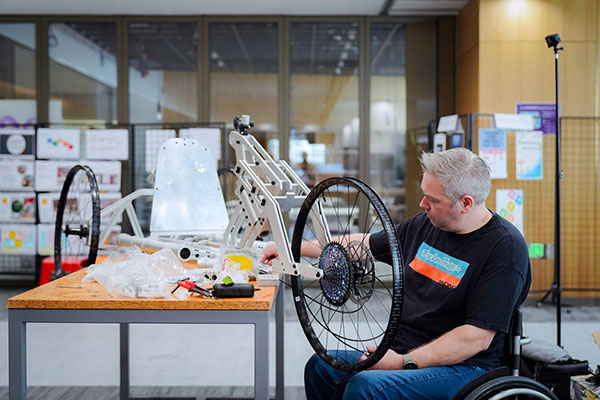
This digital Engineering article explores how engineering curricula are evolving to better integrate hands-on experience with academic learning. Traditional programs often compartmentalize theory and practical skills, leaving graduates struggling to apply classroom knowledge in real-world contexts. To overcome this gap, many institutions now emphasize project-based learning, design studios, internships, and collaborative assignments that mirror professional workflows.
Rather than relegating projects to the end of a course, educators increasingly embed them throughout the curriculum so that theory and practice grow together. In these models, students confront open-ended, real engineering problems that force them to make tradeoffs, i.e., choosing materials, handling cost constraints, accounting for manufacturability, and navigating uncertainty. These tasks require students to connect fundamentals in mechanics, materials, computing, and systems thinking, rather than treating each discipline in isolation.
The article also highlights the role of mentorship and industry partnerships. When faculty coordinate with practitioners, design challenges better align with current practices. Internships or capstone collaborations expose students to workflows, documentation expectations, and team dynamics they won’t experience in lecture halls. That exposure gives students a clearer sense of how engineering is done in the field.
Assessments in this hybrid model go beyond exams. Projects are evaluated via reports, prototypes, peer reviews, and presentations. Reflection and iteration become part of the learning cycle. Educators encourage students to revisit their design decisions as they gain deeper knowledge, creating feedback loops between doing and understanding.
Finally, the article notes challenges: coordinating across departments, ensuring consistency in project difficulty, and training faculty to mentor rather than lecture. Some students may initially feel uneasy with ambiguity. But over time, bridging theory and practice builds confidence, creativity, and readiness for professional challenges. For engineering education to stay relevant, this shift toward integrated, practice-oriented pedagogy is no longer optional; it’s essential.
