

This interesting article on IEEE Spectrum recounts how the U.S. Post Office was mobilized into a civil-defense arm during early Cold War tensions.
The Soviet Union’s first atomic test on August 29, 1949, triggered U.S. emergency measures—President Truman reinstated the Office of Civilian Defense and enacted the Federal Civil Defense Act of 1950 to formalize preparedness operations. Leveraging its extensive infrastructure, the Post Office was directed to prepare roughly 1,500 postal branches as fallout shelters by the mid-1960s, collectively capable of housing over a million people.
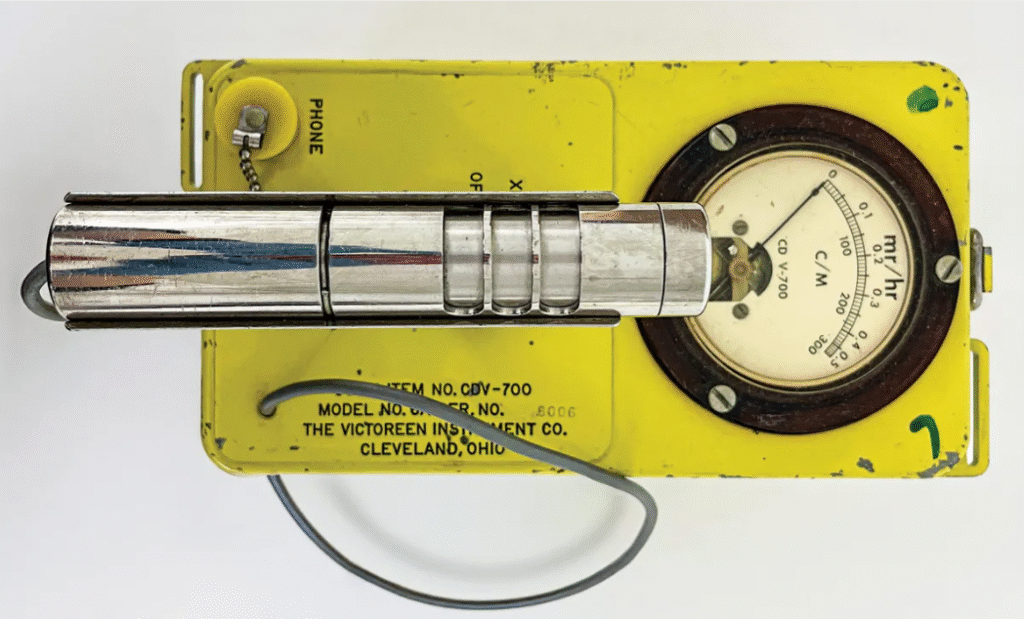
These sites were equipped with a standardized CD V-700 Geiger counter kit, enabling postal employees—trained in radiological detection—to monitor beta and gamma radiation post-attack. Kits followed uniform specifications to support shelter occupants during the critical decay period of fallout. Staff volunteers also organized ham-radio communication networks to maintain connectivity if conventional channels failed.
The article situates these efforts within larger civil-defense logistics: repurposing national infrastructure for dual civilian and security applications. The article showcases engineering in practice—scaling radiation sensors, standardized supply provisioning, staff training, and communication redundancy—all underpinned by government policy directives.
The article highlights the integration of early sensor technology (Geiger counters), standardized kit design, logistics planning, field training, and community-level emergency communications. It offers a concrete example of how engineering solutions were adapted at scale for resilience and readiness in the nuclear age.
