

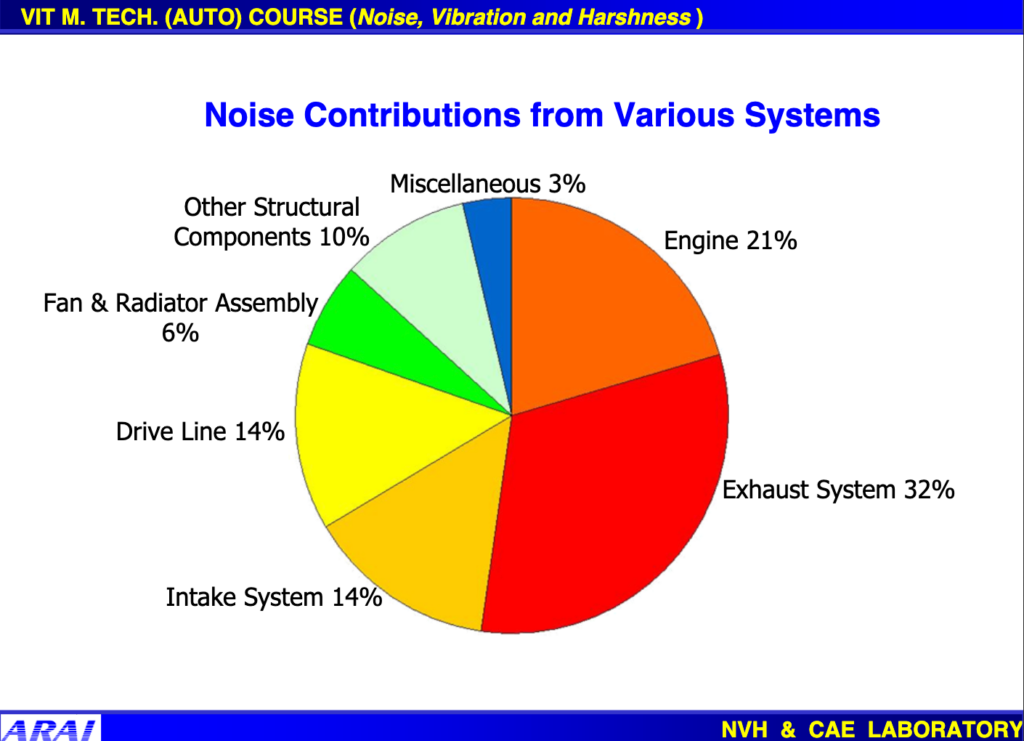
The latest issue of Hardware FYI explores a frequently overlooked aspect of engineering: perceived quality. Rather than focusing only on specifications and performance metrics, the article examines why people instinctively judge machines by what they hear, feel, and experience physically. Central to that discussion is NVH engineering, the discipline of noise, vibration, and harshness testing, widely used in automotive and mechanical systems.
The article explains that a product can technically meet all requirements while still feeling poorly made. A loose door handle, an unpleasant vibration, or an irritating sound can undermine confidence in an otherwise capable machine. NVH engineering attempts to solve those issues by studying how sound and vibration originate, travel through structures, and reach the user. Engineers typically frame the challenge as a “source-path-receiver” problem: identify where unwanted vibration begins, determine how it propagates, and intervene through damping, isolation, stiffness changes, absorbers, or improved mounting systems.
The article also highlights the limits of pure simulation in complex engineering systems. Vehicles and mechanical assemblies often behave in ways that are too difficult or expensive to predict entirely through theoretical models. As a result, testing remains inseparable from product development. The article quotes engineers from the late 1990s who argued that the automotive industry regularly builds systems it cannot fully analyze beforehand, making experimentation and empirical testing essential.
Beyond NVH, the newsletter broadens into hardware engineering culture and manufacturing trends. It discusses the value of “cowboy engineering,” where experimentation and hands-on trial often precede formal understanding. Additional sections touch on startup funding, robotics, injection molding, autonomous vehicles, and industrial AI, reinforcing the publication’s broader focus on practical engineering knowledge.
Overall, the article argues that engineering quality is not defined only by numbers or performance charts. Much of what people perceive as craftsmanship comes from subtle sensory details that operate below conscious analysis, making sound and vibration control a core part of modern product design.
