

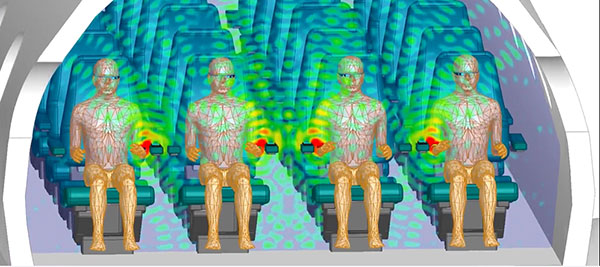
Wearable devices such as smartwatches, fitness trackers, and health monitors are becoming increasingly common, but their design introduces engineering challenges that go beyond those faced by conventional electronics. Because wearables remain in continuous contact with the human body, developers must consider complex interactions between electronics, materials, and human skin. These factors include thermal comfort, electromagnetic performance, mechanical flexibility, and long-term durability. Multiphysics simulation is emerging as a crucial tool for addressing these design challenges before physical prototypes are built, tells Digital Engineering 24/7.
Unlike traditional consumer electronics, wearable Internet of Things devices operate under highly variable conditions. They must function reliably despite constant motion, exposure to sweat, temperature fluctuations, and the mechanical stresses produced by daily activity. Designers must therefore evaluate not only electronic performance but also how the device behaves as a physical object worn on the body. Multiphysics modeling enables engineers to analyze the combined effects of electrical, thermal, and mechanical forces that influence device behavior.
One major concern in wearable design is thermal management. Electronic components generate heat, and when a device sits directly against the skin, even small temperature increases can cause discomfort or safety concerns. Engineers must therefore simulate heat transfer and material behavior to ensure that devices remain safe during extended use. Similarly, electromagnetic simulations help verify that wireless communication components operate efficiently without causing interference or exceeding regulatory exposure limits.
Mechanical flexibility is another critical factor. Wearables must bend, stretch, and conform to the body while protecting internal electronics. Simulation tools allow engineers to study stress distribution in flexible materials and predict where fatigue or structural failure might occur over time. By evaluating these interactions virtually, development teams can refine product designs earlier in the process and reduce the number of costly prototypes.
As wearable technology continues to expand into healthcare, sports, and industrial applications, the importance of physics-based design will only increase. Multiphysics simulation enables engineers to balance performance, comfort, and safety, ensuring that wearable devices integrate seamlessly with the human body while meeting demanding reliability requirements.
