

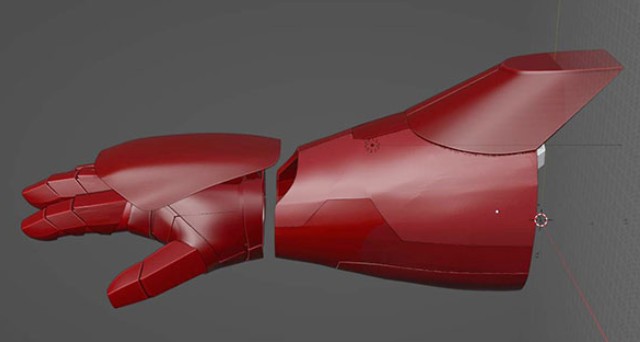
A fascination with superhero technology is pushing one engineer to explore what it would actually take to build something resembling an Iron Man-style suit. The Digital Engineering 24/7 article follows Tommy Davenport, a systems engineer in the defense industry who spends his off-hours developing a functional exosuit inspired by comic book armor. What begins as a personal passion project quickly becomes a case study in the intersection of simulation, advanced manufacturing, and systems engineering.
Davenport’s work highlights the complexity behind translating science fiction into engineering reality. Building a wearable suit capable of movement assistance or protection requires integrating multiple disciplines, including mechanical design, electronics, power systems, and control software. Rather than treating the project as a novelty, he approaches it with the same rigor used in professional engineering environments, relying heavily on digital tools to test ideas before physical prototyping.
Simulation plays a central role. By modeling stresses, motion, and ergonomics in a virtual environment, Davenport can refine designs and avoid costly trial-and-error fabrication. This mirrors broader trends in engineering, where digital twins and simulation-driven workflows are becoming essential for managing complexity and reducing development cycles. The suit itself evolves iteratively, with components redesigned based on performance data and practical constraints.
The project also underscores the limits of current technology. Challenges such as power supply, weight distribution, and heat management remain significant barriers to creating a fully autonomous, flight-capable suit. While individual elements like powered exoskeletons or advanced materials exist, integrating them into a cohesive, wearable system remains a major hurdle.
Beyond the technical aspects, the story reflects a broader cultural shift in engineering. Personal projects are increasingly becoming platforms for experimentation, learning, and innovation. By combining professional expertise with creative ambition, engineers like Davenport are exploring ideas that might eventually influence real-world applications in defense, healthcare, and mobility.
The “Iron Man” vision may still be out of reach, but efforts like this demonstrate how close certain pieces have come and how much engineering ingenuity is still required to bring them together.
