

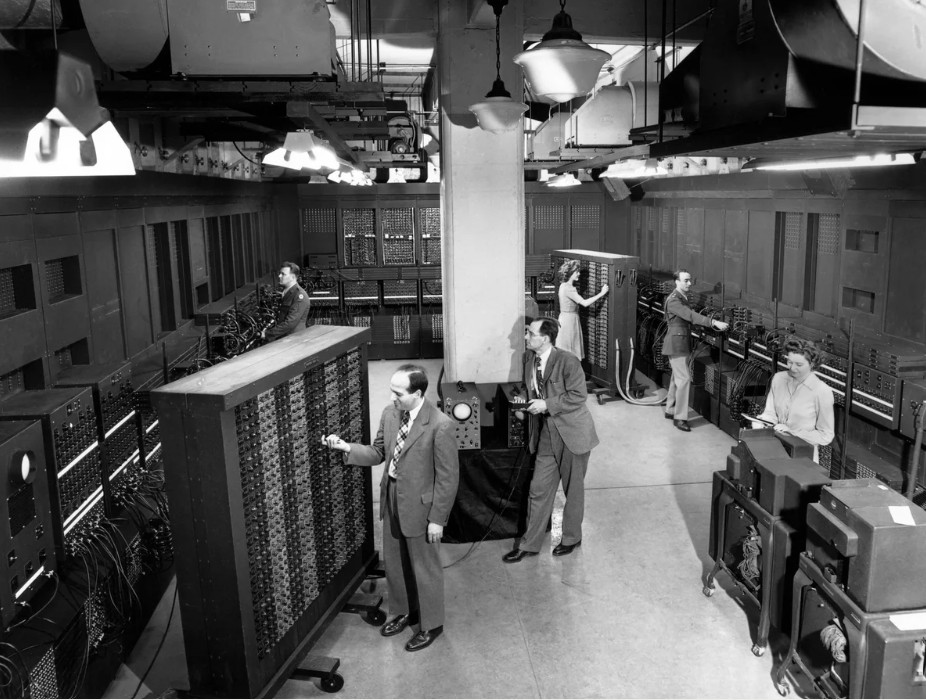
The IEEE Spectrum article reflects on a pivotal moment in engineering history, marking eight decades since the emergence of a machine that reshaped computation. ENIAC’s designation as an IEEE Milestone in 1987 highlights its significance as a breakthrough that demonstrated the practicality of large-scale electronic digital computing.
Built in the mid-1940s, ENIAC introduced a new way of thinking about computation. It showed that electronic systems could handle complex numerical tasks at speeds far beyond mechanical devices, establishing a foundation for modern computing. The machine’s ability to process large volumes of calculations efficiently made it a transformative tool for science, engineering, and industry.
The IEEE recognition emphasizes not just ENIAC’s technical achievement but its broader influence. The system helped validate the concept of general-purpose computing, proving that a single machine could be adapted to solve many types of problems. This flexibility directly influenced the development of stored-program computers, which became the standard architecture for future systems.
ENIAC’s legacy extends beyond hardware innovation. It marked the beginning of a computing era that would reshape research, education, and communication. By enabling faster analysis and more complex modeling, it accelerated progress across disciplines and opened new possibilities for technological advancement. The ripple effects of this shift continue to define the digital world today.
The milestone plaque, displayed at the University of Pennsylvania’s Moore School where ENIAC was built, serves as a reminder of this transition. It commemorates not just a machine, but a turning point when electronic computation moved from theory to reality.
Eighty years later, ENIAC stands as a symbol of engineering ambition and proof that foundational ideas, once realized, can influence generations of innovation.
