

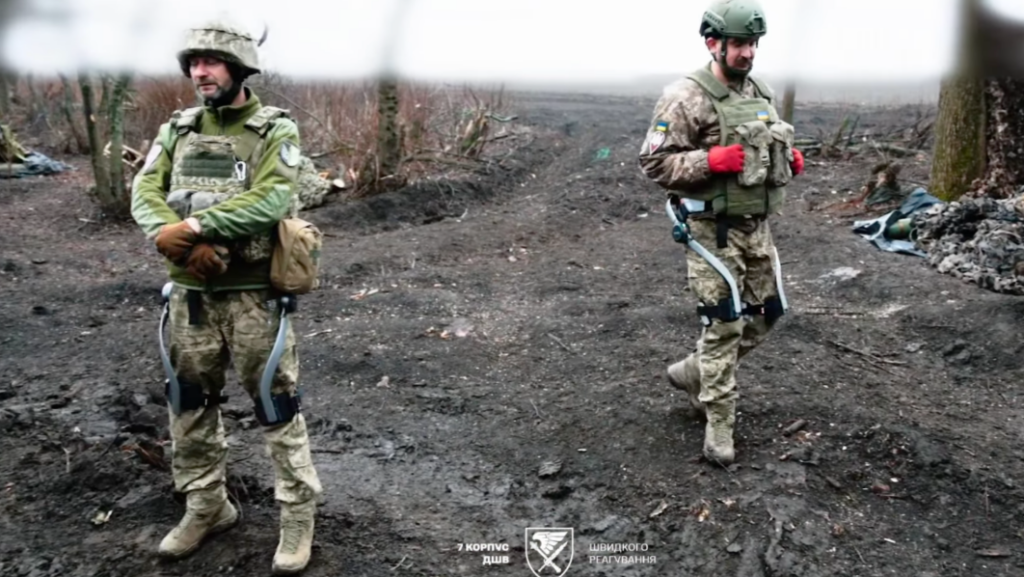
Wearable robotics, long associated with rehabilitation and industrial work, are now appearing in active combat zones. The article from Popular Science examines Ukraine’s early use of exoskeletons on the battlefield, marking a notable shift in how physical strain is managed in modern warfare.
Ukrainian forces are testing lightweight exoskeletons designed to support the lower body, wrapping around the waist and legs with a back brace for stability. These systems reduce the load on leg muscles by about 30%, allowing soldiers to carry heavy artillery shells with less fatigue. Given that artillery crews may handle 15–30 shells per day, each weighing around 50 kilograms, the physical benefit is significant.
The devices also enhance mobility. Soldiers equipped with the exoskeletons can reportedly run at speeds up to 12 miles per hour over extended distances, far exceeding typical human endurance under load. This combination of strength and speed offers clear advantages in logistics and battlefield responsiveness, where moving quickly while carrying equipment can determine effectiveness.
Interestingly, the technology originates from civilian applications. The exoskeletons are produced by a consumer-focused company and were initially designed for outdoor activities and mobility support. Integrated AI systems adapt to a user’s body and movement patterns in real time, adjusting assistance levels based on weight and gait. While the manufacturer does not endorse military use, the accessibility of such devices highlights how off-the-shelf technologies are increasingly repurposed in conflict.
This development reflects a broader trend in modern warfare: rapid adaptation using commercially available tools. Similar patterns have been seen with drones and communication systems. Exoskeletons extend that logic to human performance, augmenting soldiers rather than replacing them.
Although still in testing, the technology signals a practical shift. Instead of futuristic powered armor, current systems focus on incremental gains, reducing fatigue, preventing injury, and improving efficiency. These improvements, while subtle, could compound over time, influencing how armies sustain operations and manage physical demands on the front line.
