

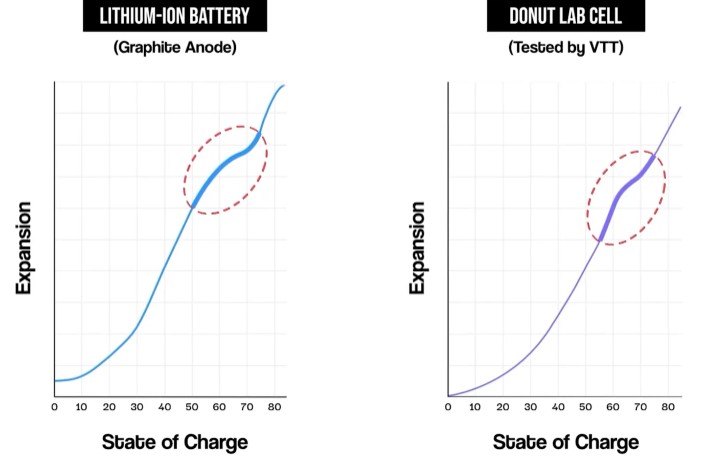
The Hardware FYI article examines the growing gap between bold battery technology announcements and the evidence needed to support them, using Finnish startup Donut Lab as a case study. The company attracted widespread attention after claiming to have developed a solid state battery with energy density and charging performance that could significantly outperform today’s lithium-ion batteries. While the announcement generated excitement across the electric vehicle industry, the article argues that the available technical evidence falls well short of substantiating such claims.
The author explains that Donut Lab’s published specifications and promotional material provide few details about the battery’s chemistry, manufacturing process, testing methodology, or independent verification. Without peer-reviewed data, third-party laboratory testing, or prototype demonstrations, it is difficult for engineers and investors to evaluate whether the technology represents a genuine breakthrough or an optimistic projection. The article emphasizes that this lack of transparency is common among startups competing for attention in the crowded battery sector.
Rather than dismissing Donut Lab outright, the article encourages readers to distinguish between promising engineering developments and extraordinary performance claims. If the company had introduced a high-performance lithium-ion battery with incremental improvements, the announcement would likely have been received with less skepticism. Instead, presenting the technology as a transformative solid state battery places a much higher burden on the company to demonstrate its capabilities through reproducible evidence.
The discussion also highlights a broader challenge within the battery industry, where ambitious announcements often precede technical validation. Investors, media outlets, and manufacturers are eager to identify the next major energy storage breakthrough, but premature claims can distort expectations and erode confidence when they cannot be independently confirmed. According to the author, meaningful advances in battery technology should ultimately be judged by engineering data rather than marketing narratives.
The article concludes with a reminder that innovation depends on rigorous verification as much as bold ideas. Breakthrough technologies deserve attention, but lasting credibility comes from transparent testing, reproducible results, and independent validation. As the battery industry races to develop safer, lighter, and more energy-dense storage systems, extraordinary claims must still withstand ordinary scientific scrutiny.
