

As humanoid robots attract public attention with lifelike movements and humanlike appearances, manufacturers may be focusing on the wrong question. In the Forbes.com article, Lisa Caldwell argues that industrial companies should care less about whether robots resemble people and more about whether they can perform useful work safely, efficiently, and reliably inside demanding production environments.
The article explains that the excitement surrounding humanoid robotics often comes from consumer fascination and media visibility rather than manufacturing necessity. While companies such as Tesla and Figure AI continue developing human-shaped robots, many factories already rely on automation systems that bear little resemblance to humans yet excel at specialized tasks. Industrial robotics, the article argues, has historically succeeded because machines were designed around operational efficiency instead of human imitation.
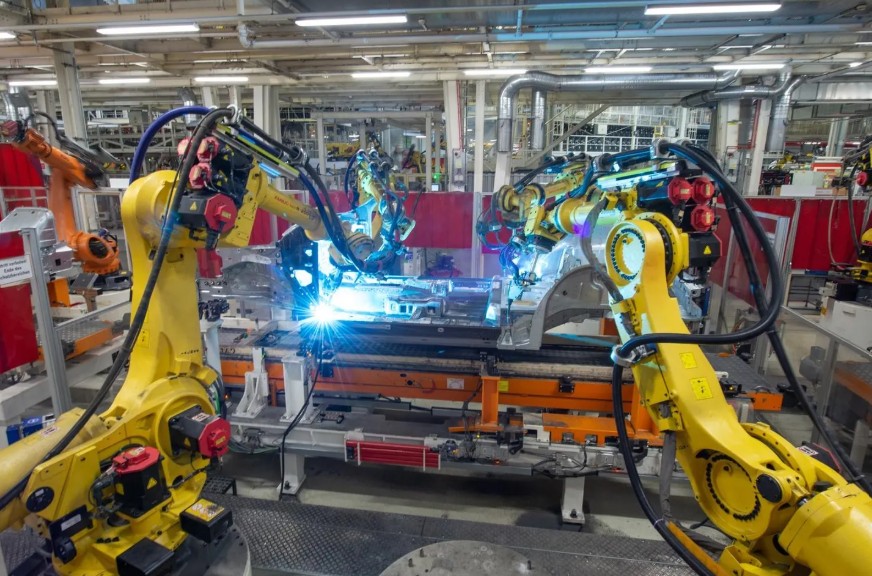
Manufacturing environments prioritize precision, repeatability, uptime, and worker safety. In many cases, robotic arms, autonomous mobile robots, and task-specific automation systems outperform humanoid machines because they are simpler, more stable, and easier to integrate into production workflows. A welding robot, for example, does not need arms and legs shaped like a person to complete repetitive industrial work accurately.
The article also points out that humanlike robots can introduce additional engineering complexity. Balancing, mobility, dexterity, and energy efficiency become significantly harder when machines are designed to replicate human movement. That complexity can increase costs and reduce reliability in environments where consistency is critical. Manufacturers are therefore more likely to evaluate robots according to return on investment, maintainability, and production impact rather than appearance.
At the same time, the article acknowledges that humanoid robots may still hold value in certain situations. Facilities originally designed around human movement and tools could potentially benefit from machines capable of navigating stairs, operating existing equipment, or functioning in spaces built for people. Even so, the broader manufacturing sector remains focused on practical outcomes instead of futuristic aesthetics.
Caldwell ultimately argues that the future of industrial robotics will likely be shaped less by science-fiction imagery and more by operational usefulness. The most valuable robots may not be the ones that look human, but the ones that best solve manufacturing problems while fitting efficiently into real industrial systems.
