

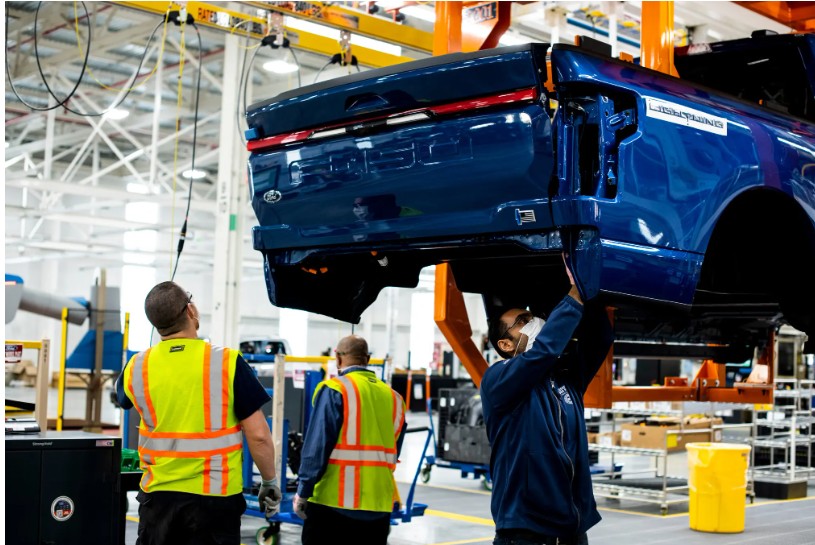
Ford Motor Company is dramatically reshaping its electric-vehicle strategy after years of heavy investment in battery-powered models. Faced with sluggish demand, rising costs, and shifting U.S. policy incentives, the automaker announced major write-downs approaching $19.5 billion and a strategic pivot away from large electric vehicles like the F-150 Lightning toward hybrids, extended-range electrics, and more affordable EVs, tells The New York Times.
The iconic F-150 Lightning, Ford’s flagship all-electric pickup, ended production in late 2025 as part of this recalibration. Rather than pursue costly low-profit full-size EV trucks, the company plans to replace future Lightning models with extended-range versions that combine electric drive with a gasoline generator, giving drivers both electric performance and long-distance range.
The restructuring also affects Ford’s broader manufacturing footprint. Battery plants and EV-focused facilities are being repurposed: some will shift toward producing hybrid and conventional trucks and vans, while others may supply stationary energy storage systems for data centers or grid applications instead of battery packs for vehicles.
Ford’s leadership frames the overhaul as a customer-driven adjustment. With federal incentives for EV purchases reduced and charging infrastructure development lagging, widespread buyer adoption has not matched automakers’ early optimism. By diversifying its powertrain mix, targeting roughly 50% of global sales from hybrids, electrified models, and full EVs by 2030, Ford is trying to balance sustainability aims with profitability and real market demand.
Industry observers see the move as part of a broader trend among legacy automakers adjusting EV plans in response to economic and policy realities. While Ford still plans smaller, lower-cost EV models and remains invested in electrification, the shift underscores a more pragmatic approach: integrating hybrid technology, leveraging combustion-powered range extenders, and aligning production with customer preferences rather than assuming rapid EV dominance.
