

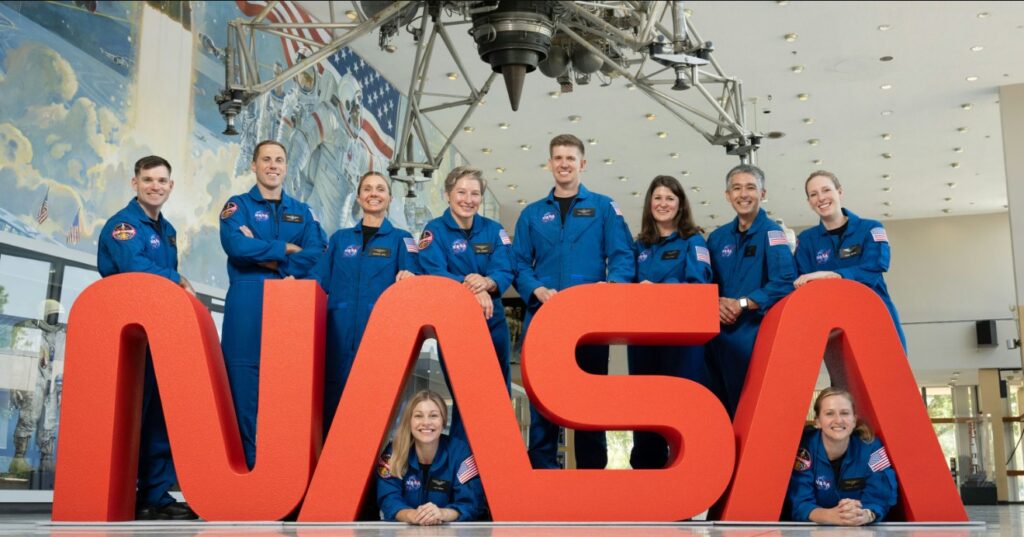
Lauren Edgar, a Caltech alumna with a PhD in geology, has been selected as one of NASA’s newest astronaut candidates, joining a highly competitive class chosen from more than 8,000 applicants across the United States. After completing approximately two years of training, Edgar and her fellow candidates will become eligible for flight assignments supporting missions in low Earth orbit as well as future exploration of the Moon and Mars, tells Caltech.
Edgar’s scientific background in geology plays an increasingly important role in human space exploration. Fieldwork experience in remote environments such as Antarctica, Iceland, Hawaii, and the American Southwest prepared her to operate in small teams under challenging conditions—skills directly applicable to future missions beyond Earth. Geological training also emphasizes observation, data analysis, and the ability to identify unusual features in natural environments, all essential capabilities for astronauts conducting scientific investigations in space.
During her time at Caltech, Edgar worked in the laboratory of planetary scientist John Grotzinger and contributed to several NASA Mars missions managed by the Jet Propulsion Laboratory. Her research focused on sedimentology and planetary surface processes, particularly questions about whether Mars once hosted environments capable of supporting life. These experiences provided early exposure to mission operations and planetary science research, shaping her path toward a career connected to space exploration.
Edgar later expanded her work to include lunar exploration. As deputy principal investigator on the Artemis III Geology Team, she helped define scientific goals and field activities for upcoming human missions to the Moon. Such missions require extensive planning, since astronauts must carefully prioritize observations and sample collection during limited extravehicular activities.
Looking ahead, Edgar is particularly interested in studying the Moon’s formation and its potential to preserve clues about Earth’s earliest history. Because plate tectonics have erased much of Earth’s ancient geological record, the Moon may hold evidence of conditions that existed during the planet’s earliest stages. Scientists are also investigating whether water ice and other resources exist near the lunar south pole to support sustained exploration.
For Edgar, the transition from studying planetary geology on Earth to exploring it in space represents a natural continuation of scientific curiosity. Her career illustrates how expertise in Earth science can contribute directly to humanity’s next era of planetary exploration.
