

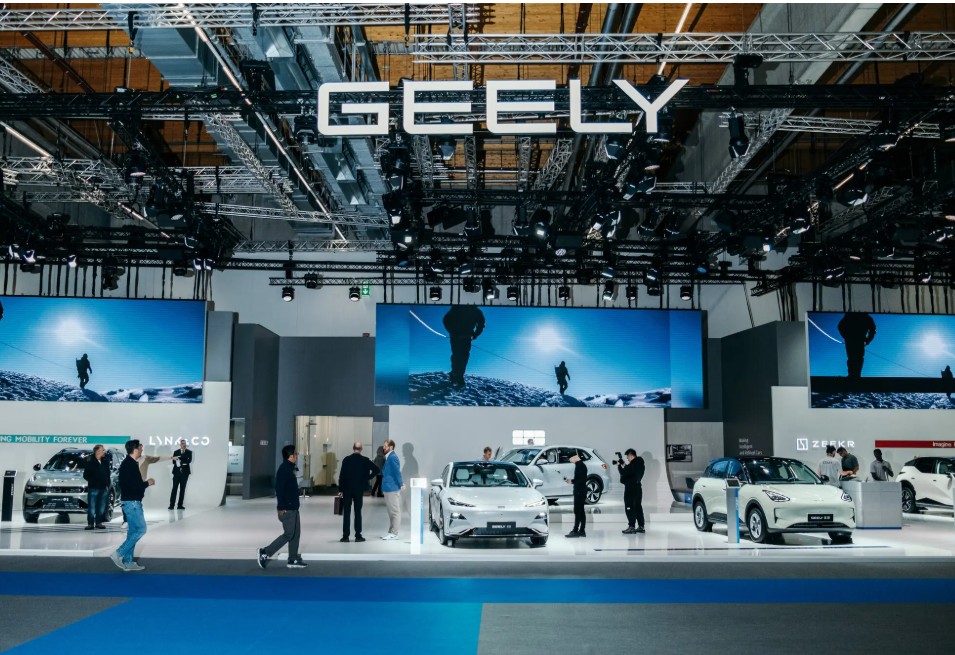
Zhejiang Geely Holding Group is emerging as a serious contender in the global automotive industry, challenging both domestic rivals and established international brands. At a time when Chinese automakers are gaining momentum abroad, Geely has distinguished itself with a diversified strategy that spans gasoline, hybrid, plug-in hybrid, and fully electric vehicles, tells The New York Times. This flexibility has allowed the company to respond quickly to shifting market conditions, including fluctuating fuel prices and changing government policies.
Geely’s recent performance highlights its growing influence. It surpassed BYD in sales during the first two months of the year and continues to expand its presence overseas, more than doubling exports to regions such as Europe and the Middle East. The company aims to generate 30% of its sales outside China by 2030, signaling a long-term commitment to global markets.
A key advantage lies in Geely’s ability to pivot between powertrains. When subsidies for electric vehicles declined and demand weakened, the company leaned on gasoline models. As fuel prices surged after geopolitical tensions, it shifted back toward hybrids and electric vehicles. This adaptability has helped it maintain competitiveness in a volatile market where consumer preferences are rapidly evolving.
Geely’s growth is also rooted in strategic acquisitions and investments. The company revitalized Volvo after acquiring it in 2010 and has built a diverse portfolio that includes brands such as Lotus, Polestar, and Zeekr. Its global footprint, including manufacturing and design operations outside China, enables it to navigate trade barriers more effectively.
Despite its progress, challenges remain. Intense price competition within China has eroded margins, and the company’s wide brand portfolio demands sustained high sales. Still, Geely’s export-driven strategy and technological focus position it as a formidable player in a rapidly shifting automotive landscape.
