

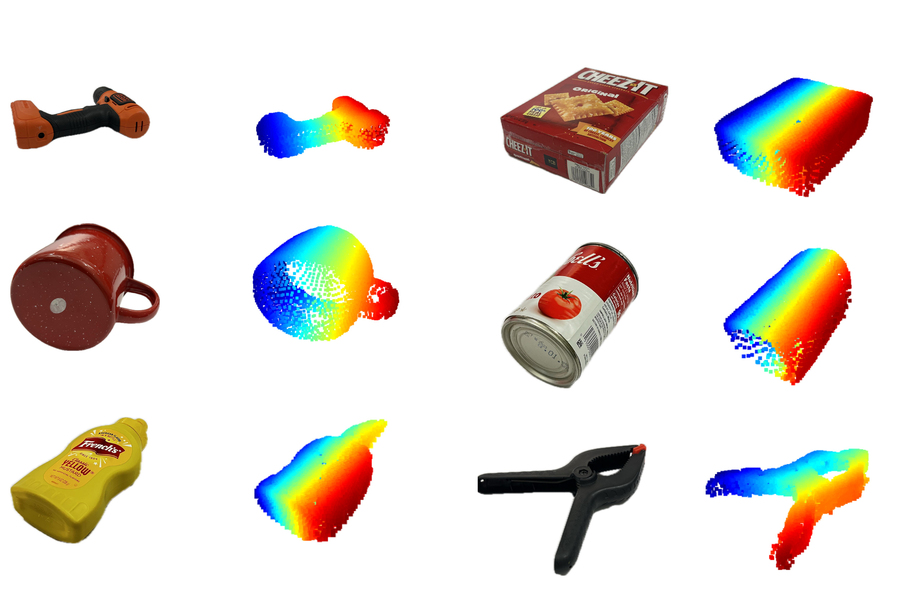
Researchers at MIT have developed a generative AI-enhanced wireless vision system capable of detecting and reconstructing objects hidden behind obstacles with improved accuracy. The work builds on earlier efforts that used wireless signals, such as millimeter waves, to “see” through barriers such as walls, boxes, and packaging material, tells MIT News.
Traditional wireless imaging systems rely on reflected signals to infer the shape and position of concealed objects. While effective, these systems often struggle with incomplete or noisy data, especially in cluttered environments where signals scatter unpredictably. The MIT team addressed this limitation by integrating generative AI into the reconstruction process.
The new approach uses AI models to fill in missing information and generate more accurate representations of hidden objects. By learning patterns from large datasets, the system can infer likely shapes and structures even when only partial signal data is available. This significantly improves detection capabilities, enabling robots and sensing systems to better interpret complex, obstructed environments.
One of the key advantages of this method is its ability to enhance perception without requiring additional hardware. Instead of relying solely on stronger signals or more sensors, the system improves performance through computational intelligence. This makes it more scalable and adaptable for real-world applications, including robotics, warehouse automation, and search-and-rescue operations.
The research highlights a broader trend in engineering, where generative AI is used not just for content creation but also for interpreting physical data. By combining wireless sensing with AI-driven reconstruction, the system moves closer to reliable “vision” in environments where traditional cameras fail.
As autonomous systems increasingly operate in complex, real-world settings, the ability to perceive hidden objects becomes critical. This work demonstrates that generative AI can bridge gaps in sensing, enabling machines to make more informed decisions even when direct visibility is not possible.
