

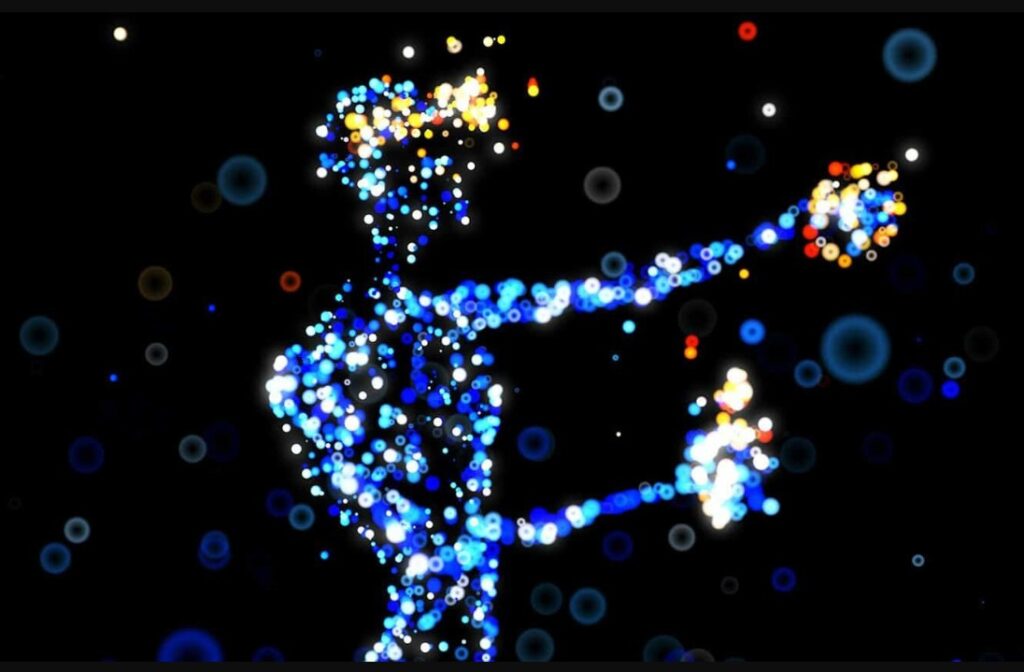
Researchers at North Carolina State University explored whether giving AI agents a physical presence in virtual reality could make them better learning partners for programming students, reports Tech Xplore. In their study, 18 participants, most with little or no programming experience, worked on two coding tasks with support from either an embodied AI agent (able to gesture and interact in the VR space) or a voice-only version.
The results showed that both kinds of AI assistance helped students learn. Still, interacting with the embodied version made a more noticeable difference in student experience. Participants reported feeling more engaged, more motivated, and more confident when their AI partner had a body that could point to code segments, gesture, or move within the environment. Those nonverbal cues helped them interpret AI suggestions.
However, the embodied approach wasn’t flawless. Some students found it distracting when the agent made movements unrelated to its spoken or logical actions, especially if those gestures didn’t clearly connect to what the AI agent was saying. That suggests designers of embodied AI must carefully calibrate motion and behavior to avoid cognitive overload or confusion.
The authors frame the idea around “pAIr learning,” where an AI agent acts not merely as a tool but as a programmed peer in coding tasks. The gap between tool and partner narrows when the AI is embodied; it becomes a more natural collaborator.
Looking ahead, this proof-of-concept offers promising direction. For programming education and perhaps other fields, embodied AI in immersive environments could reshape how students interact with tutors, assistants, or partners. But the path won’t be simple: one must balance expressive, helpful behavior with restraint, so that the AI feels supportive, not distracting.
