

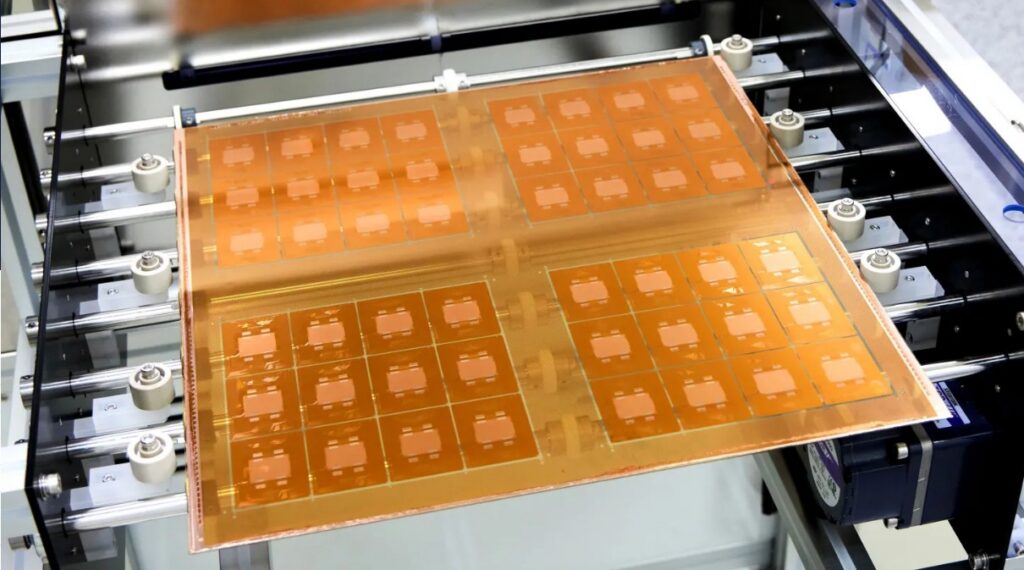
As artificial intelligence drives demand for larger and more power-hungry processors, the semiconductor industry is searching for materials capable of supporting the next generation of computing hardware. According to the MIT Technology Review article, one of the most promising candidates may be glass. Researchers and major chip manufacturers are investigating glass substrates as an alternative to the organic materials currently used beneath advanced semiconductor packages.
Traditional chip packaging has become a growing bottleneck in AI computing. Modern AI accelerators contain enormous numbers of transistors and increasingly rely on tightly integrated memory and chiplet architectures. As performance demands rise, engineers face mounting challenges involving heat dissipation, signal integrity, and power delivery. Existing substrate materials struggle to keep pace with the density and complexity required by advanced AI systems.
Glass offers several potential advantages. It is flatter and more dimensionally stable than current organic substrates, which could enable finer wiring and more precise chip placement. That precision becomes increasingly important as semiconductor manufacturers attempt to pack more computing capability into smaller spaces. Glass also handles heat differently and may improve electrical performance by reducing signal loss across densely interconnected components.
Companies, including Intel, are investing heavily in the technology. Intel has already demonstrated prototypes using glass substrates and believes the material could support the industry’s long-term scaling ambitions well into the next decade. Researchers suggest that glass could enable larger chip packages with significantly more interconnections, helping support the enormous bandwidth demands of AI workloads.
However, major technical and manufacturing challenges remain. Glass is more brittle than conventional materials, making it harder to process in high-volume semiconductor fabrication environments. Developing reliable manufacturing methods and adapting existing supply chains could take years. Costs also remain uncertain, particularly while the technology is still in early development stages.
The article frames glass substrates as part of a broader transformation occurring across the semiconductor industry. As transistor scaling alone becomes less sufficient for improving performance, innovation is increasingly shifting toward advanced packaging, chip integration, and materials engineering. Future breakthroughs in AI computing may therefore depend not only on smaller transistors but also on rethinking the physical foundations upon which chips are built.
