

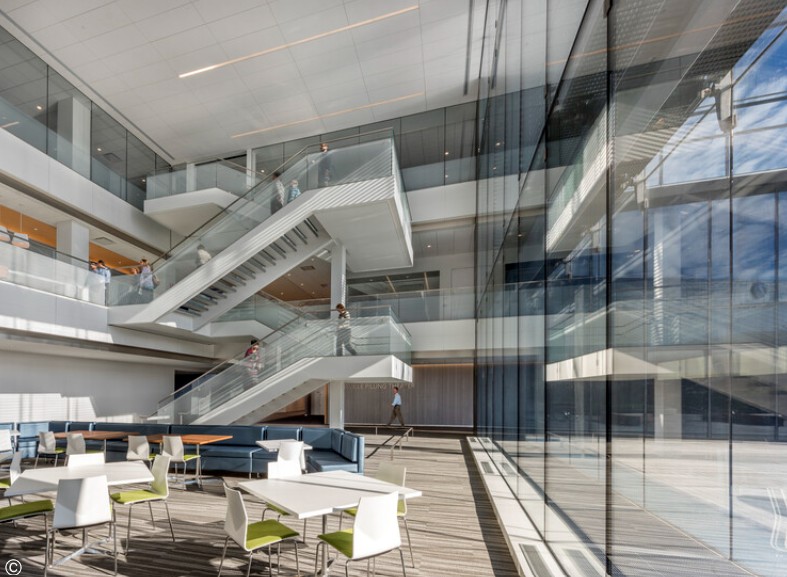
Over the past 200 years, architectural glass has evolved from a limited, fragile material into one of the defining elements of modern construction. The Arch Daily article traces this transformation, showing how technological advances have expanded glass from simple window panes into a structural and aesthetic cornerstone of contemporary buildings.
Glass is scientifically classified as an amorphous solid, lacking the ordered structure of crystalline materials, yet its architectural significance lies in its ability to mediate light, transparency, and connection between interior and exterior spaces. Early uses were restricted to small openings, but industrial advancements enabled larger, clearer panes, setting the stage for modernist architecture and the rise of glass-dominated facades.
The twentieth century marked a turning point, as architects began to embrace glass as both enclosure and expression. Advances such as float glass production improved uniformity and clarity, while laminated and tempered glass enhanced safety. These developments allowed glass to move beyond windows into curtain walls, skylights, and even structural elements like floors and bridges.
In recent decades, innovation has focused on performance. Multi-pane glazing systems filled with gases such as argon have addressed thermal inefficiencies, while coatings and treatments improve insulation, solar control, and durability. Glass has also become more versatile, appearing in hybrid systems, textured finishes, and layered compositions that balance transparency with privacy and artistic expression.
Despite these advances, the material presents growing environmental challenges. Glass production carries a high carbon footprint, and its widespread use in large facades raises concerns about energy consumption. New experimental approaches, including alternative glazing systems and sustainable design strategies, aim to mitigate these impacts while preserving the qualities that make glass indispensable.
The article ultimately presents glass as a material defined by contradiction: fragile yet strong, transparent yet expressive, and technologically advanced yet environmentally demanding. Its evolution reflects broader shifts in architecture, where innovation must now balance performance, aesthetics, and sustainability.
