

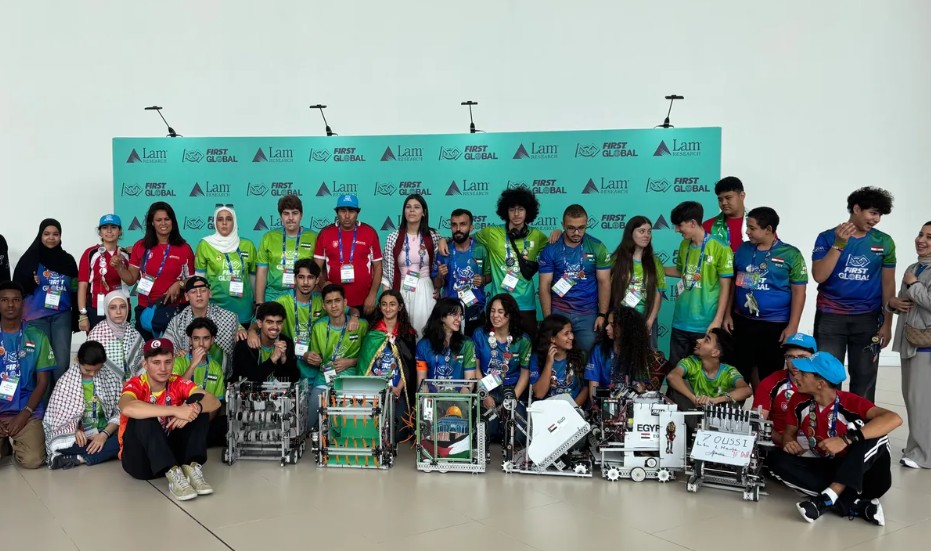
This year’s FIRST Global Robotics Challenge, which drew student teams from 191 countries, was held in Panama City. The theme: eco-equilibrium—how to protect species and ecosystems using robotic solutions. Over three days, teams of 14- to 18-year-olds remotely operated robots in timed matches, blending competition and cooperation, tells IEEE Spectrum.
Each match lasted 2 minutes 30 seconds and consisted of several tasks: robots picked up “biodiversity units” (multicolored balls) and delivered them to human players; removed “barriers” (larger grey balls) and disposed of them; then team members tossed biodiversity units into cleared containers to score. An additional cooperation twist: each match grouped three teams into what the event calls alliances of six robots. If all six climbed a rope at the end, each team’s scores were multiplied by 1.5.
In the playoffs, the top 24 teams formed six alliances of four teams each. The winning alliance included teams from Cameroon, Mexico, Panama, and Venezuela, each student in that alliance receiving a gold medal.
The article highlights that the event is not purely about winning. One student from South Africa noted, “It’s not about winning, it’s not about losing, it’s about learning from others.” It also mentions real-world issues teams faced, such as the Jamaican team arriving late due to travel disruption after Hurricane Melissa, yet still managing to compete, thanks to support from organizers.
The FIRST Global Robotics Challenge offers more than a technical showdown; it creates a global playground for young engineers to network, problem-solve, and address real-life themes such as ecosystem protection. For engineering students, this kind of event highlights how robotics competitions can become springboards for global STEM collaboration and societal challenges.
